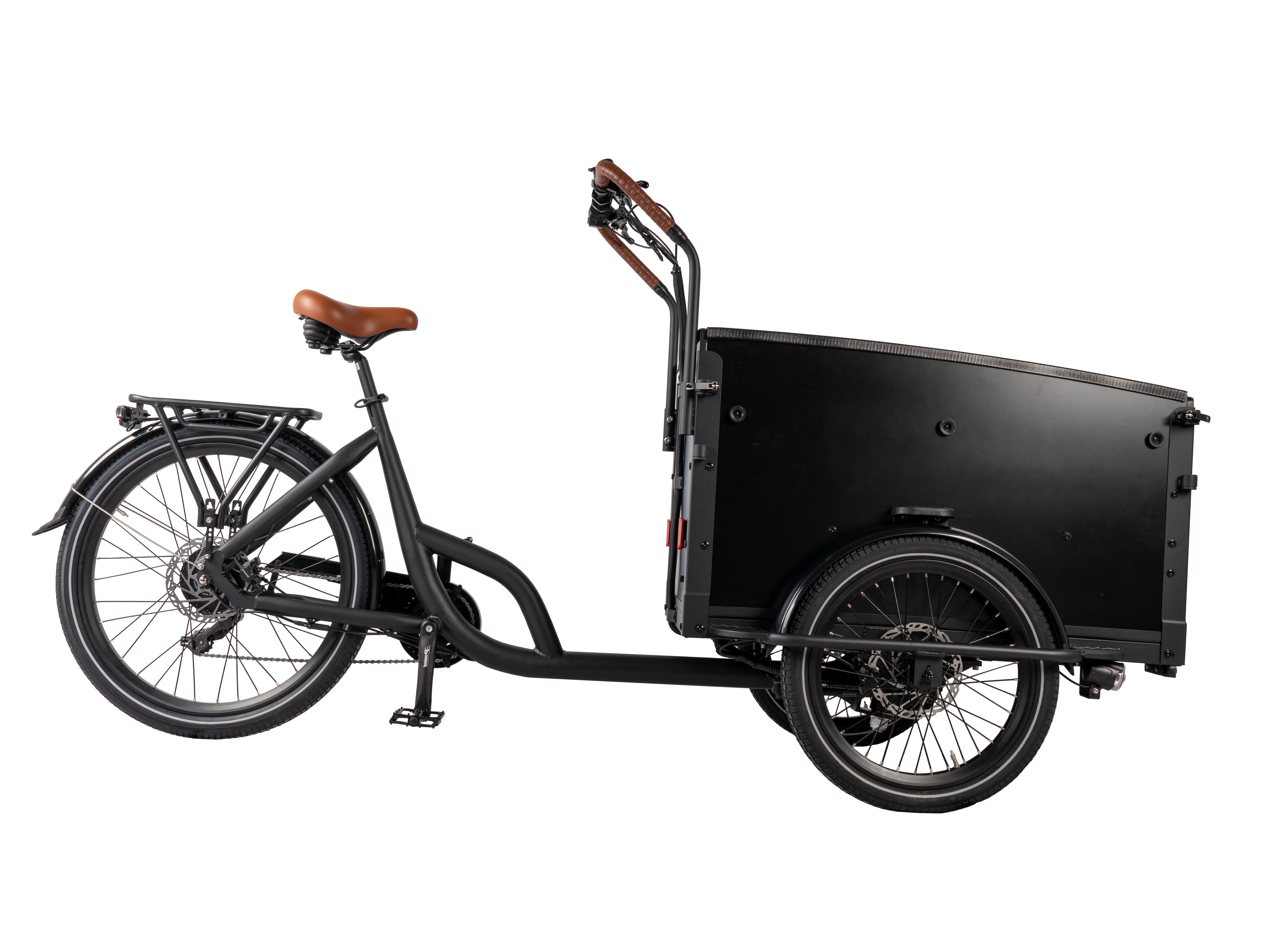
Commercial logistics face immense, rising pressures today. Urban congestion slows daily routes to an unpredictable crawl, while new zero-emission zones force rapid fleet transformations. Escalating last-mile delivery costs also threaten tight profit margins across the industry. Because of these distinct challenges, fleet managers must move beyond viewing cargo e-bikes as mere consumer novelties. We are now actively evaluating the modern Professional Cargo Bike as a highly viable fleet replacement for traditional commercial delivery vans. Our goal is to provide fleet operators and business owners with an objective, evidence-based framework. You will learn exactly how to determine if a specific Business Cargo Bike aligns with your strict operational requirements, payload limits, and ROI targets. By following this detailed guide, you can confidently navigate the transition toward sustainable, high-efficiency urban logistics.
Key Takeaways
Operational Fit: Professional cargo bikes excel in high-density urban environments with stop-and-go routes, but are not suitable for intercity or bulk-freight logistics.
Clear ROI Pathways: Savings are driven by eliminated fuel costs, reduced parking fines, and lower maintenance overhead, offsetting the high initial unit costs.
Categorization Matters: Success depends on matching the bike type (Long-tail, Front-loader/Long John, or Heavy-Duty Trike) to the specific commercial payload and volume.
Pilot Before Scaling: Fleet adoption requires addressing real-world risks like rider safety, weather limitations, and battery management infrastructure before full rollout.
The Business Case: ROI and Operational Economics
Replacing delivery vans requires a compelling financial argument. You must evaluate the direct capital outlay against verifiable daily savings. Fleet managers often find the economic benefits compelling once they analyze urban delivery metrics.
Upfront Investment vs. Commercial Vans
You face significant upfront costs when purchasing traditional commercial vans. A new electric delivery van easily exceeds $45,000. In stark contrast, a commercial-grade cargo bike requires a much smaller initial investment. Fleet managers typically spend between $6,000 and $12,000 per unit. This massive difference in initial capital allows businesses to procure multiple bikes for the price of a single van. You can instantly expand your delivery footprint and hire more riders simultaneously.
Direct Savings
Beyond the initial purchase, cargo bikes drastically reduce your daily operational overhead. You will notice immediate cost-reduction in several key areas:
Fuel and Charging Costs: You completely eliminate expensive diesel or gas purchases. Charging an e-bike battery costs mere cents per day.
Insurance Premiums: Commercial auto insurance policies drain company budgets. Bicycle fleet insurance costs a fraction of automotive rates.
Parking Fees and Fines: Urban delivery drivers inevitably accumulate parking tickets. Riders easily bypass these fines by legally parking bikes on sidewalks or in designated micro-mobility zones.
Vehicle Tax and Compliance: Many city governments waive road taxes and congestion charges for electric bikes entirely.
Efficiency Gains
Financial savings mean little if delivery speeds drop. Fortunately, cargo bikes offer massive efficiency gains in dense cities. They bypass heavy traffic congestion by utilizing dedicated cycle lanes. Riders do not circle blocks searching for loading zones. They park directly outside the customer's front door. This eliminates the lengthy "walk time" from a distant parking spot to the final drop-off point. Consequently, your hourly delivery rate improves significantly in urban centers.
Categorizing the Business Cargo Bike: Which Type Fits Your Fleet?
You cannot buy a one-size-fits-all vehicle. Success relies heavily on choosing the exact model for your specific payload. We categorize these vehicles into three primary distinct formats.
Front-Loaders (Long Johns)
Front-loaders place the cargo box securely between the rider and the front wheel. This design creates a very low center of gravity. They offer excellent stability when cornering at moderate speeds.
Best for: Courier services, florists, and transporting fragile goods. They easily accept modular box attachments.
Parameters: Typical payload limits range from 100kg to 150kg. They offer excellent enclosed volumetric capacity for standard-sized parcels.
Long-Tails
Long-tails resemble traditional bicycles but feature an extended rear frame. The rider sits forward, and the cargo rests over the rear wheel. They lack large enclosed boxes but offer unmatched agility.
Best for: Tradespeople, municipal services, and carrying tools. They shine when maneuverability takes priority over enclosed volume.
Parameters: They boast a narrow wheelbase. They easily weave through heavy traffic and fit through standard residential gateways.
Heavy-Duty Cargo Trikes/Quadricycles
These large vehicles feature three or four wheels. They prioritize maximum carrying capacity over outright speed. Many businesses view these as the true replacements for small vans.
Best for: Last-mile parcel delivery and bulk grocery orders. They handle maximum payload requirements perfectly.
Parameters: They provide unmatched stability for heavy loads. Payload capacities often exceed 200kg easily. However, they suffer limited maneuverability in narrow cycle lanes due to their wider track. A heavy-duty Business Cargo Bike serves high-volume routes best.
Bike Category
Primary Strength
Typical Payload Limit
Ideal B2B Application
Front-Loader
Low center of gravity
100kg - 150kg
Fragile goods, standard parcels
Long-Tail
Traffic agility
80kg - 120kg
Mobile trades, tool transport
Heavy-Duty Trike
Maximum volume
200kg+
High-volume parcel, grocery
Core Evaluation Criteria for Fleet Managers
You must rigorously evaluate hardware specifications before purchasing a fleet. Consumer-grade parts will fail under commercial stress. Use the following criteria to ensure your investment survives daily urban abuse.
Payload Capacity (Cargo + Rider)
Manufacturers often advertise "total gross weight." You must calculate the true payload limit carefully. Subtract the weight of the bike and the rider from the gross limit. The remaining number equals your actual cargo capacity. Furthermore, note the absolute importance of inclusivity. You must accommodate heavier or taller riders safely alongside the cargo weight. Commercial models feature adjustable stems and reinforced seat posts to support diverse staff.
Motor Torque & E-Assist Systems
Commercial loads demand serious mechanical power. Standard e-bike motors will burn out quickly under 200kg loads. You require high-torque mid-drive motors for commercial use. Look for reliable systems like the Bosch Cargo Line. These specialized motors deliver 85Nm of torque or higher. High torque ensures riders can handle heavy starts from a dead stop and conquer steep urban inclines effortlessly.
Battery Range & Swappability
A single battery rarely survives a full 8-hour delivery shift. High-torque motors drain power rapidly when hauling maximum payloads. You must evaluate the absolute necessity of dual-battery setups. Alternatively, implement easily swappable battery systems. Riders simply pull into a local depot, swap a depleted battery for a fresh one, and continue their route. This strategy effectively prevents costly fleet downtime.
Component Durability & Serviceability
Commercial fleets experience immense wear and tear. You must insist on commercial-grade components. Demand 4-piston hydraulic brakes for reliable, heavy stopping power. Choose reinforced belt drives over standard metal chains. Belt drives stretch less and require zero lubrication. Finally, secure a strong local dealer service network. You need rapid access to spare parts and professional mechanics to minimize expensive vehicle downtime.
Mapping Solutions to Specific B2B Use Cases
You must align the vehicle type directly with your specific industry needs. A mismatched vehicle creates rider frustration and operational delays. Let us map these solutions to real-world business scenarios.
Last-Mile Parcel & Courier
Parcel carriers move hundreds of small boxes daily. Volume capacity dictates success in this sector. You should focus entirely on enclosed box sizes and stop-and-go efficiency. Heavy-duty trikes perform exceptionally well here. Riders can dismount quickly, grab a parcel, and secure the box in seconds.
Food Delivery & Cold Chain
Hot food and frozen groceries require specialized handling. You must evaluate insulated box compatibility. Ensure the bike frame supports secure mounting for heavy thermal boxes. Furthermore, evaluate suspension requirements closely. Front suspension forks absorb road bumps, effectively preventing spills and ruined food orders.
Mobile Trades & Municipal Services
Plumbers, electricians, and park maintenance crews carry expensive equipment. Assess tool storage options and overall payload security. Long-tails equipped with lockable panniers work perfectly. They offer incredible site accessibility. Tradespeople can ride directly into parks, courtyards, or pedestrian zones where large vans remain strictly prohibited.
Crucial Caveat: Where Cargo Bikes Fail
You must explicitly define where these vehicles fail. A Professional Cargo Bike cannot solve every logistical problem. They fail miserably on long intercity highway transits. They struggle immensely with extreme bulk items like construction lumber or large furniture. Finally, they pose serious safety risks on suburban routes completely lacking safe cycling infrastructure. Know your operational boundaries.
Use Case Scenario
Key Requirement
Recommended Solution
Avoid Using For
Parcel Delivery
Maximum volume & frequent stops
Heavy-Duty Trike / Front-Loader
Intercity highway routes
Cold Chain/Food
Temperature control & suspension
Front-Loader with insulated box
Extremely bulky industrial goods
Mobile Trades
Agility & lockable tool storage
Long-Tail with rigid panniers
High-volume multi-drop parcels
Implementation Risks and Adoption Hurdles
Transitioning from vans to bikes introduces entirely new operational challenges. You cannot simply hand over the keys and expect immediate success. Fleet managers must address several critical risks proactively.
Security & Theft Prevention
Commercial e-bikes represent high-value targets for thieves. You face a high risk of commercial bike and cargo theft daily. Address this by investing heavily in specialized security hardware. Purchase heavy-duty chains and ground anchors. Install hidden GPS tracking modules on every frame. Most importantly, secure overnight depot storage is absolutely mandatory. Do not let riders park them on the street overnight.
Rider Training & Safety
Riding a heavy cargo vehicle differs vastly from riding a standard commuter bicycle. Outline the steep learning curve associated with heavily loaded front-loaders or trikes. Front-loaders steer via linkage rods, requiring distinct balance techniques. Trikes corner differently and can tip if taken too fast. You must implement mandatory rider training programs in controlled environments before allowing staff into live city traffic.
Weather Resilience
You must confront the harsh realities of operating an open-air fleet year-round. Riders face torrential rain, freezing winds, and snow. Ignoring this reality leads to massive staff turnover. You must invest in robust weather resilience. Purchase high-quality rain canopies to shield the riders. Supply your staff with premium waterproof jackets, insulated gloves, and proper winter footwear. Rider retention depends entirely on their daily comfort.
Regulatory Compliance
Governments strictly regulate electric assist vehicles. Note the absolute importance of checking local e-bike classifications. Pay close attention to motor wattage and speed limits. In many regions, motors exceeding 250W or 750W face reclassification as mopeds. Ensure your chosen fleet legally qualifies as bicycles. This crucial step ensures your staff does not require specialized motorcycle licensing or mandatory vehicle registration plates.
Conclusion
Professional cargo bikes offer a highly suitable, deeply practical solution for specific commercial uses. They dominate dense urban routes, short-haul deliveries, and sub-200kg loads. However, they demand precise operational alignment. You cannot force them into roles meant for heavy freight trucks.
Businesses must embrace strict shortlisting logic. Define your exact daily volume, maximum weight limits, and specific route data before selecting a vehicle type. Let your operational data dictate whether you need an agile long-tail or a massive trike.
We highly recommend initiating a localized pilot program first. Lease one or two bikes initially. Test their route efficiency and gather honest rider feedback. Address any hidden bottlenecks early. Only commit to large-scale fleet procurement after proving undeniable success on your local streets.
FAQ
Q: Do riders need a special license to operate a professional cargo bike?
A: Usually, no. Most jurisdictions classify them as standard bicycles if the electric motor pedal-assist remains under local wattage limits (typically 250W in Europe or 750W in the US) and limits speeds to roughly 20 mph. However, high-power models may trigger moped classifications, requiring a special license. Always check local regulations first.
Q: How much weight can a business cargo bike realistically carry?
A: Realistic capacities vary by category. A heavy-duty commercial trike can carry a total gross weight of 250kg to 300kg. To find the actual cargo payload, you must subtract the weight of the bike itself and the rider. A typical payload limit ranges between 100kg and 200kg depending on the exact model.
Q: Are cargo bikes suitable for heavy or tall riders?
A: Yes, commercial models specifically design for inclusivity. Manufacturers utilize highly adjustable seat posts, easily movable handlebars, and reinforced frames. This ensures fleets can comfortably and safely accommodate riders of diverse heights and weights without compromising the vehicle's structural integrity.
Q: What happens to the fleet during winter or heavy rain?
A: Fleets operate year-round with proper preparation. Businesses install specialized rain canopies and wind visors on the bikes. Furthermore, fleet managers must provide staff with premium winter-rated, waterproof apparel. Changing to winter tires also ensures safe grip on wet or icy urban streets.
In the future, we will continue to uphold the brand concept of "high-end quality、green travel and enjoy life", continue to innovate and forge ahead, and provide the global with higher quality cargo bike products and services.