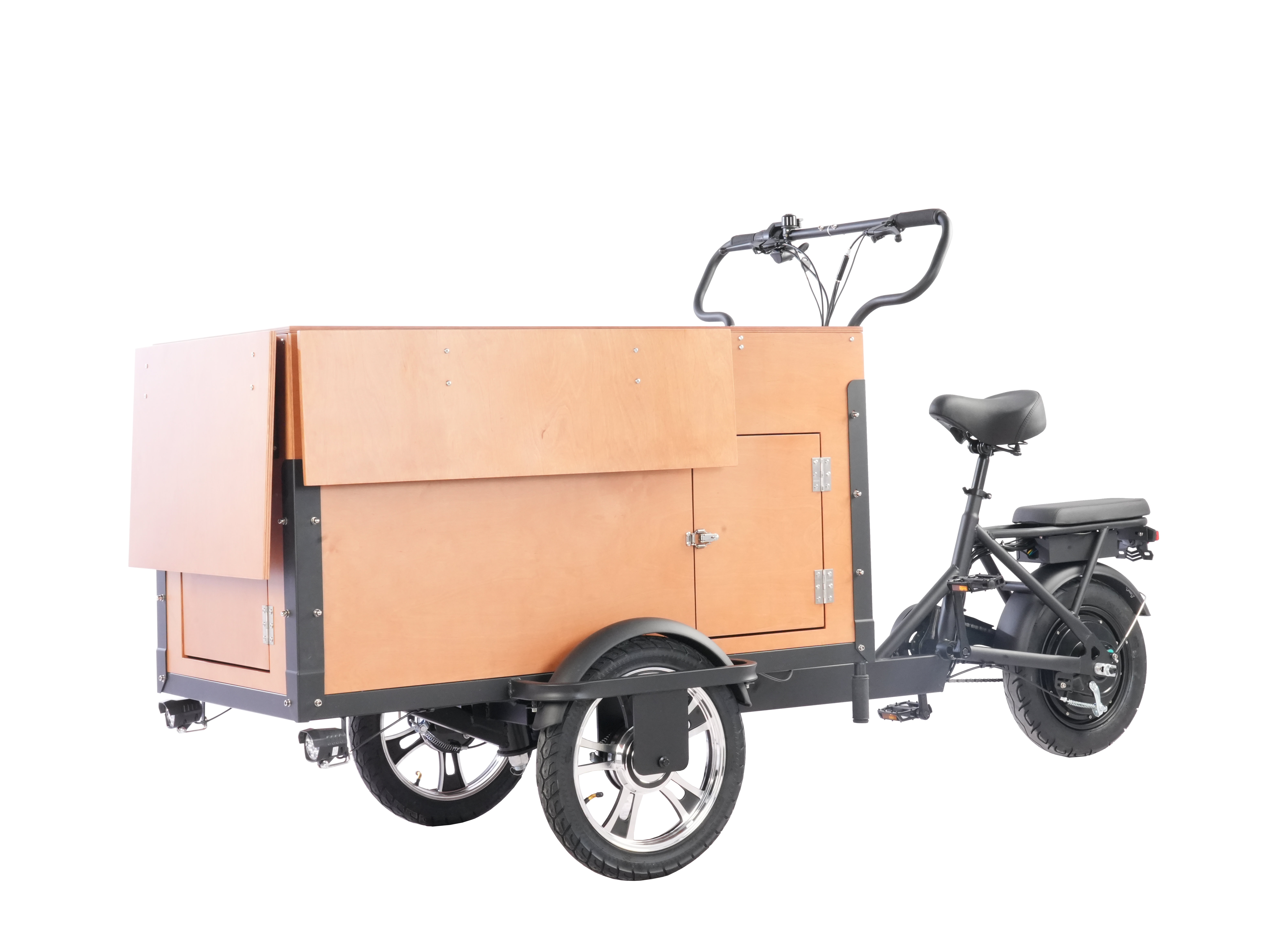
Urban logistics operators face unprecedented friction today. Rising parking fines, expanding Low Emission Zone (LEZ) tolls, and intense drop-density demands continuously squeeze profit margins. These compounding pressures force fleets to rethink how they navigate dense city centers. The narrative surrounding cycle logistics has shifted permanently. We no longer view commercial cycles as mere eco-friendly novelties. They represent a hard operational necessity for modern courier fleets. Transitioning to a cycle-based fleet requires careful upfront infrastructure planning. However, doing so yields massive reductions in route completion times and operational expenses when deployed in high-density areas. This article explores the concrete advantages of cycle logistics. You will learn how to identify bottlenecks in traditional van operations. We also map specific vehicle features directly to fleet ROI. Finally, we provide a structured framework to evaluate these vehicles. This helps you integrate them seamlessly into existing urban networks.
Key Takeaways
Faster Drop Rates: Cargo bikes bypass traffic bottlenecks and eliminate van-parking dwell times, increasing hourly drop rates in dense city centers.
Lower TCO: Electricity and maintenance costs are exponentially lower than Internal Combustion Engine (ICE) or EV vans, offsetting initial acquisition costs.
Regulatory Compliance: Future-proofs operations against expanding zero-emission zones and urban congestion charges.
Micro-Hub Dependency: Successful deployment requires transitioning from centralized warehousing to decentralized, multi-modal urban micro-hubs.
The Urban Delivery Bottleneck: Where Traditional Vans Fail
The Cost of Dwell Time
Traditional courier vans bleed money when they stop moving. We call this stationary period "dwell time." In dense cities, drivers waste critical hours simply searching for legal loading zones. Once parked, they often face long walks from the vehicle to the customer door. These micro-delays compound over a ten-hour shift. They drastically reduce the total number of drops a driver can complete daily. A right-sized Last Mile Delivery Bike solves this directly. Riders can park on sidewalks, near building entrances, or in pedestrian-only zones. This proximity eliminates the long walking distances. It keeps the vehicle in constant productive motion. You maximize route efficiency by cutting dwell time out of the equation.
Regulatory and Financial Friction
City planners actively design urban centers to discourage large vehicles. They enforce Low Emission Zones (LEZs) and congestion charging rings. These regulations impose daily tolls on traditional commercial fleets. Beyond tolls, parking citations remain a massive financial drain. Many logistics companies simply budget for parking tickets as a standard operating expense. This approach is no longer sustainable. Compliance costs destroy parcel margins. Cycle logistics offer a permanent bypass to these financial penalties. Bicycles operate exempt from urban tolls and emission taxes. They rarely incur parking fines. This regulatory immunity directly protects your operational budget.
The Volumetric Illusion
Fleet managers often over-allocate vehicle capacity. They dispatch large vans to deliver small parcels. Modern e-commerce packages consist primarily of lightweight materials and air. Logistics professionals say these parcels "cube out" before they "weigh out." The van reaches its maximum volume limit long before hitting its payload weight limit. Consequently, standard vans haul vast amounts of empty space through congested streets. You waste fuel and space for no operational benefit. Cycle logistics match the vehicle size to the actual cargo profile. They handle high-volume, low-weight routes much more efficiently. You stop paying to transport empty air.
Core Business Outcomes: Mapping Features to Fleet ROI
Capital and Operational Expenditure Realities
Fleet transformation requires a strict financial analysis. Commercial vans demand high upfront Capital Expenditure (CapEx). They also drain budgets through Operational Expenditure (OpEx). You must pay for diesel, insurance, and complex engine maintenance. Electric vans reduce fuel costs but carry massive battery replacement liabilities. Commercial cycles alter this financial model entirely. Their initial acquisition cost is a fraction of a new van. Daily running costs drop to mere pennies for electricity. Maintenance involves affordable bicycle components rather than proprietary automotive parts. You must factor in faster depreciation cycles for cycles, but the daily savings easily justify the investment.
Route Density and Speed-to-Door
Speed determines courier profitability. However, we measure speed differently in urban logistics. Top speed matters far less than average point-to-point speed. Vans sit idle in traffic jams. Cycles bypass gridlock using dedicated bike lanes. Riders navigate through parks and pedestrian plazas. They cut directly across city blocks. This agility results in higher average urban speeds. Higher speeds lead to greater route density. Your couriers complete more drops per hour. This increased drop-density maximizes revenue generation for every labor hour scheduled. Speed-to-door improves dramatically when you shrink the vehicle footprint.
Emissions and Corporate ESG
Zero-emission logistics used to be an optional marketing angle. Today, it stands as a mandatory business requirement. Municipalities and large enterprises enforce strict Environmental, Social, and Governance (ESG) criteria. They refuse to award logistics contracts to highly polluting fleets. Shifting to cycle delivery secures your place in future vendor selection processes. It provides verifiable carbon reduction data. You can present these metrics in corporate sustainability reports. Carbon reduction acts as a compliance tool, not just a green initiative. It directly enables you to win lucrative corporate delivery contracts.
Operational Metrics: Commercial Van vs. Commercial Cycle
Metric
Commercial Van
Commercial Cycle
Average Urban Speed
10-15 km/h
15-20 km/h
Hourly Drop Rate
5-8 drops/hour
10-15 drops/hour
Parking Dwell Time
High (10-15 mins/stop)
Minimal (1-2 mins/stop)
Energy Cost per 100km
High (Fuel/Large Battery)
Extremely Low (Small Battery)
Categorizing the Last Mile Delivery Bike: Matching Payload to Vehicle
Commercial Longtails
Longtail cycles represent the lightest category of fleet vehicles. They feature an extended rear frame designed for panniers or small boxes. These models offer extreme maneuverability. Riders handle them exactly like standard bicycles. They easily weave through tight traffic and narrow alleys. However, they carry a restricted payload limit, typically capping at 100kg. We recommend longtails for low-volume, high-density operations. They excel in document courier work, food delivery, and small-parcel pharmaceutical routes.
Front-Loader (Bakfiets) and Heavy-Duty 2-Wheelers
Front-loader models position a large cargo box between the rider and the front wheel. This design lowers the center of gravity. It improves stability under heavy loads. These vehicles handle payloads between 100kg and 150kg. The enclosed front boxes offer excellent weather protection for sensitive goods. Couriers can easily monitor the cargo while riding. We suggest front-loaders for mixed parcel delivery. They balance agility with substantial carrying capacity. They form the backbone of many successful neighborhood delivery hubs.
Electric Cargo Trikes and Quadricycles
Heavy-duty multi-track cycles bridge the gap between bicycles and light commercial vans. A heavy-duty Professional Cargo Bike often features three or four wheels. It carries pallet-sized, fully enclosed cargo boxes. Payloads safely range from 150kg up to 300kg or more. These vehicles support cold chain logistics and heavy bulk transport. They are the closest true replacements for traditional vans. The rider often sits under a protective canopy. This canopy ensures comfortable full-day operations in adverse weather conditions.
Consumer vs. Professional Grade
Fleet managers frequently make a critical purchasing error. They buy cheap consumer e-bikes to save upfront capital. This mistake always leads to catastrophic fleet downtime. Consumer bikes cannot withstand eight-hour commercial shifts. Their brakes fail. Their frames crack under constant maximum payloads. You must strictly procure professional-grade equipment. Look for heavy-duty braking systems, reinforced commercial frames, and commercial-rated drivetrains. Professional models cost more initially but guarantee the operational uptime required for logistics.
Common Mistake: Deploying consumer e-bikes for professional courier routes.
Best Practice: Always require commercial-grade certification and reinforced component lists from your vehicle vendor.
Implementation Realities: Infrastructure and Operational Risks
The Micro-Hub Requirement
You cannot deploy commercial cycles from out-of-town mega-warehouses. Bicycles lack the range and speed to travel twenty miles down a highway before beginning a route. Successful deployment requires decentralized infrastructure. You must utilize urban micro-hubs. These facilities sit directly inside the delivery territory.
Line-haul trucks bring bulk goods from the mega-warehouse to the urban edge.
Workers cross-dock the parcels at the micro-hub.
Couriers load the cycles and execute the final miles immediately.
This multi-modal approach is mandatory. Skipping the micro-hub stage guarantees a failed implementation.
Battery Management and Charging Infrastructure
Battery logistics dictate your operational success. A dead battery mid-route destroys your Service Level Agreements (SLAs). Commercial models use heavy-duty electric assist to move large payloads. These motors drain batteries quickly in hilly terrain. You cannot afford to park the vehicle for four hours to recharge. You must implement swappable battery systems. Couriers simply swap a depleted battery for a fresh one at the micro-hub in sixty seconds. You must also establish strict charging safety protocols to prevent lithium-ion fire hazards in your facilities.
Rider Acquisition and Retention
Cycle logistics completely changes your hiring profile. You no longer recruit licensed commercial truck drivers. You recruit, train, and retain cargo cyclists. This talent pool requires different management strategies. You must provide specialized safety training. Maneuvering a 300kg trike through pedestrian zones demands unique skills. Insurance liability also shifts. You must protect riders from urban traffic hazards. Providing high-quality safety gear and ergonomic vehicles dramatically improves employee retention in a physically demanding role.
Maintenance and Fleet Downtime
Transparent maintenance planning prevents fleet collapse. Commercial cycles suffer intense wear-and-tear. Brake pads degrade rapidly when stopping heavy loads in urban traffic. Drivetrains and chains require constant tensioning and lubrication. You cannot treat these vehicles like typical office equipment. They demand dedicated, preventative service schedules. You must keep spare parts stocked at the micro-hub. If a brake lever breaks, you need the capability to fix it overnight. Neglecting maintenance schedules leads directly to unacceptable vehicle downtime.
Evaluation Framework: How to Shortlist a Professional Cargo Bike
Modularity and Box Customization
Your chosen vehicle must fit your existing workflows. Do not alter your entire package handling process to suit a bicycle. Evaluate the vendor's cargo box modularity. Can the box accommodate standard Euro-pallets? Does it offer temperature-controlled compartments for grocery delivery? Look for quick-release systems. Some systems allow workers to pre-load a cargo box in the warehouse. The courier then simply clicks the loaded box onto the cycle frame. This modularity drastically reduces cross-docking delays.
Telematics and Fleet Software Integration
Modern fleets run on data. Your commercial cycles must integrate into your existing tech stack. Evaluate the vehicle's onboard telematics. It should offer GPS asset tracking and remote battery health monitoring. Crucially, the system must offer Open API access. You need to push this vehicle data into your proprietary route optimization software. Managers must track cycles exactly as they track commercial vans on their dispatch dashboards.
Service Level Agreements (SLAs) and Support
Never purchase hardware without guaranteed local support. Many overseas vendors sell cheap hardware but offer zero local maintenance infrastructure. This lack of support is dangerous. You need B2B service networks. Prioritize manufacturers who offer strict uptime SLAs. They should guarantee rapid parts replacement and provide comprehensive commercial warranties. If a motor fails, you need a replacement shipped and installed within 48 hours. A local consumer bike shop cannot provide this level of fleet support.
Pilot Testing Logic
Do not order fifty vehicles for a blind rollout. You must establish baseline metrics first. We strongly recommend a localized pilot program. Deploy three to five cycles in one specific, high-density postcode. Run the pilot for three months. Compare the drop rates and operational expenses directly against the vans previously servicing that zone. Use this data to refine your micro-hub workflows and battery charging routines. Only proceed to fleet-wide deployment once the pilot proves the local financial model.
Commercial cycles deliver undeniable advantages, but they do not universally replace the traditional van. They act as a specialized tool engineered specifically for the final two to three miles of high-density routes. By eliminating dwell time and bypassing congestion, they drastically increase hourly drop rates. Furthermore, they protect your budget against urban tolls and volatile fuel prices. Success depends entirely on your preparation. You must invest in decentralized micro-hubs and prioritize commercial-grade hardware. As a next step, we encourage logistics operators to conduct a thorough route-density audit. Identify your most congested urban zones. Then, schedule an operational cost consultation and request a vehicle demonstration from a reputable commercial cycle manufacturer.
FAQ
Q: What is the maximum payload of a professional cargo bike?
A: Payload capacity varies by vehicle category. Heavy-duty two-wheelers typically carry up to 100kg to 150kg. Larger commercial trikes and quadricycles can handle between 150kg and 350kg. These figures usually exclude the weight of the rider.
Q: Do riders need a specialized license to operate commercial cargo e-bikes?
A: It depends on regional laws and vehicle classification. Standard e-assist cycles (usually capped at 25km/h and 250W) generally do not require a license. Heavier, higher-powered L-category vehicles may require specific moped or light commercial licenses.
Q: How long do commercial e-bike batteries last during a delivery shift?
A: Battery life depends on payload weight, topography, and motor usage. A single charge may last 30 to 60 kilometers. For full-day operations, fleets must use swappable battery systems, allowing riders to exchange depleted batteries mid-shift instantly.
Q: How do professional cargo bikes perform in extreme weather?
A: Professional models adapt well to harsh conditions. They feature weather-sealed, lockable cargo boxes to protect parcels. For the rider, manufacturers offer full windshield canopies and cabin enclosures. You can also equip fleets with specialized winter tires for ice and snow.
In the future, we will continue to uphold the brand concept of "high-end quality、green travel and enjoy life", continue to innovate and forge ahead, and provide the global with higher quality cargo bike products and services.