Cargo bikes have moved far beyond their early role as niche urban transport solutions. Today they are becoming a critical part of modern logistics systems, particularly in European cities where congestion regulations, emission targets, and delivery demand continue to reshape urban mobility.
Over the past decade, many logistics companies have started integrating cargo bikes into their delivery fleets. The appeal is clear: cargo bikes can bypass traffic congestion, operate in low-emission zones, and significantly reduce operating costs compared to traditional delivery vans. However, as demand grows, the market has also become more complex. Hundreds of models now exist, ranging from compact two-wheel delivery bikes to heavy-duty four-wheel cargo platforms.
For businesses planning to adopt cargo bikes, the key question is no longer whether to use them, but how to choose the right platform. Not all cargo bikes are designed for commercial workloads. Factors such as structural strength, power systems, connectivity, and safety architecture play a major role in determining long-term reliability and operational efficiency.
This article explores the key features companies should evaluate when selecting cargo bikes for professional use.
Load Capacity and Structural Design
One of the most important factors in any cargo bike is its load-carrying capability. While many consumer-oriented cargo bikes are designed for family use or light delivery tasks, commercial operations require significantly higher durability.
Fleet operators should consider:
Three-wheel and four-wheel cargo bikes have become increasingly popular in commercial environments because they provide better balance and support higher payloads. Some heavy-duty platforms can carry over 200 kg of cargo while maintaining stable handling in dense urban traffic.
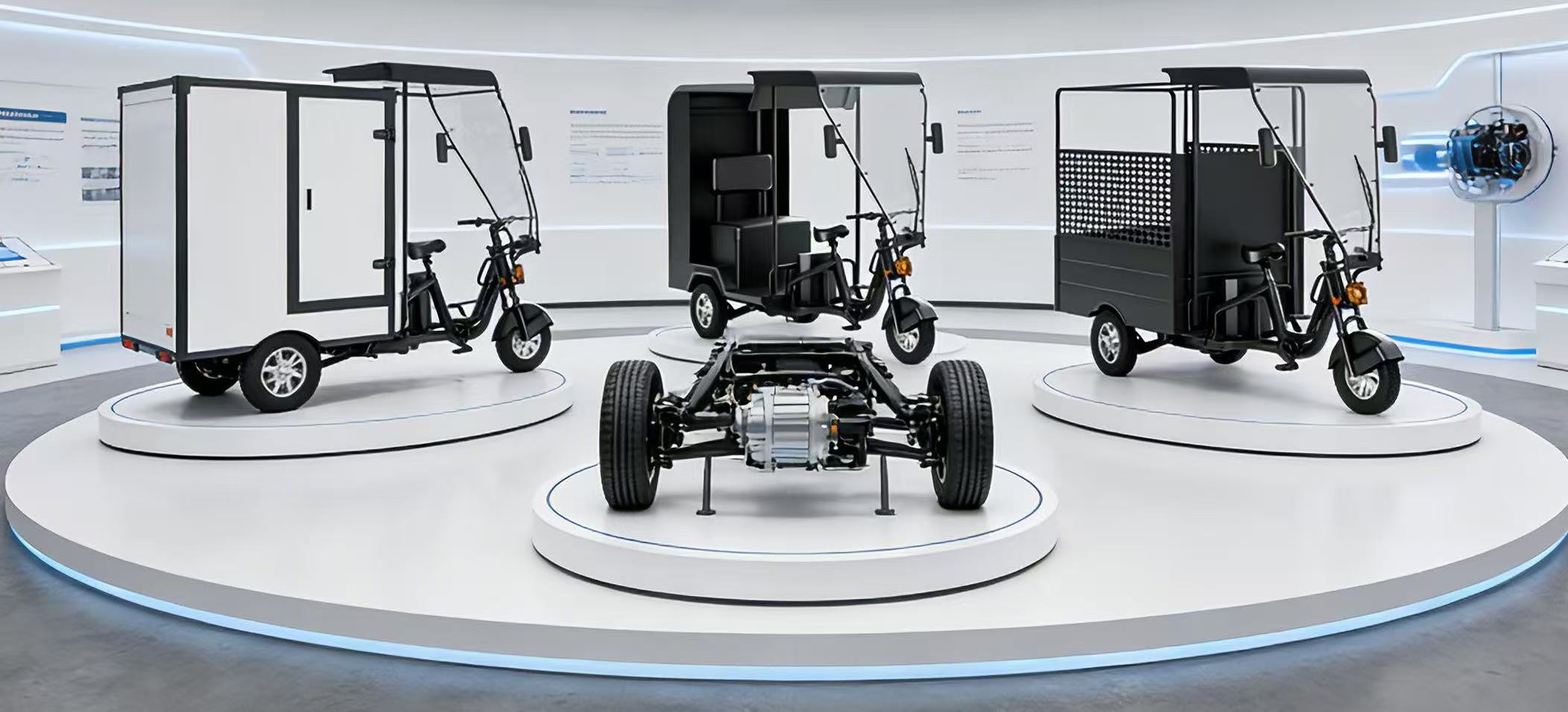
Another critical element is chassis design. A modular frame architecture allows companies to adapt cargo bikes for different delivery tasks, such as parcel logistics, food delivery, or cold-chain transport.
In commercial logistics, structural reliability is not just about capacity—it directly influences maintenance costs and fleet uptime.
Power System and Energy Efficiency
A cargo bike's power system determines how efficiently it can operate under demanding delivery conditions. Unlike leisure cycling, commercial cargo bikes must support frequent stops, heavy loads, and long daily operating hours.
Key components include:
Motor performance and torque
Battery capacity and range
Energy management systems
Charging efficiency
High-torque electric motors are particularly important for cargo bikes operating in hilly cities or carrying heavy payloads. Efficient energy management systems can also extend operational range by optimizing power consumption during acceleration and load changes.
For fleet operators, reliability is often more important than peak performance. A well-designed power system ensures consistent performance throughout long delivery shifts while minimizing downtime for charging or maintenance.
Safety Systems and Vehicle Control
Safety has become a major focus as cargo bikes transition from small-scale operations to professional logistics fleets. Modern cargo bikes must operate safely in dense urban environments alongside pedestrians, cars, and public transport.
Key safety features to evaluate include:
In recent years, new control technologies such as drive-by-wire steering systems and advanced sensor integration have started to appear in next-generation cargo platforms. These technologies improve vehicle responsiveness and enable better control in complex traffic situations.
Another emerging safety feature is the use of smart sensors that monitor system performance in real time. These sensors can detect faults early and help prevent mechanical failures during operation.
For commercial fleets, safety technology is not only about rider protection—it also reduces liability risks and operational disruptions.
Connectivity and Fleet Management
As cargo bikes become part of larger logistics networks, digital connectivity is becoming one of the most important features.
Modern fleet operators increasingly expect cargo bikes to support:
Connectivity systems allow fleet managers to monitor vehicle performance, track delivery routes, and schedule maintenance more efficiently. Real-time data can also help companies optimize delivery routes and improve operational efficiency.
For large logistics operations, connected cargo bikes function less like individual vehicles and more like nodes within a digital mobility network.
This shift toward connected mobility is transforming how cargo bikes are designed and deployed.
Conclusion
Cargo bikes are rapidly becoming an essential component of modern urban logistics systems. However, choosing the right cargo bike requires more than simply comparing specifications or purchase prices.
Businesses should carefully evaluate structural design, power system reliability, safety technologies, and digital connectivity before adopting a platform. These features directly influence operational efficiency, maintenance costs, and long-term fleet scalability.
As cities continue to push for cleaner transportation solutions, cargo bikes will play an increasingly important role in last-mile delivery networks. Companies that invest in well-designed cargo platforms today will be better positioned to adapt to the evolving landscape of urban logistics.
FAQ
1. What is the most important feature of a commercial cargo bike?
A: For professional logistics use, load capacity and structural durability are typically the most critical features. Cargo bikes used in commercial fleets must handle heavy payloads and operate reliably throughout long daily delivery cycles.
2. Are cargo bikes suitable for large delivery fleets?
A: Yes. Many logistics companies are integrating cargo bikes into their fleets for last-mile delivery. With proper connectivity and fleet management systems, cargo bikes can become an efficient and scalable solution for urban distribution.


