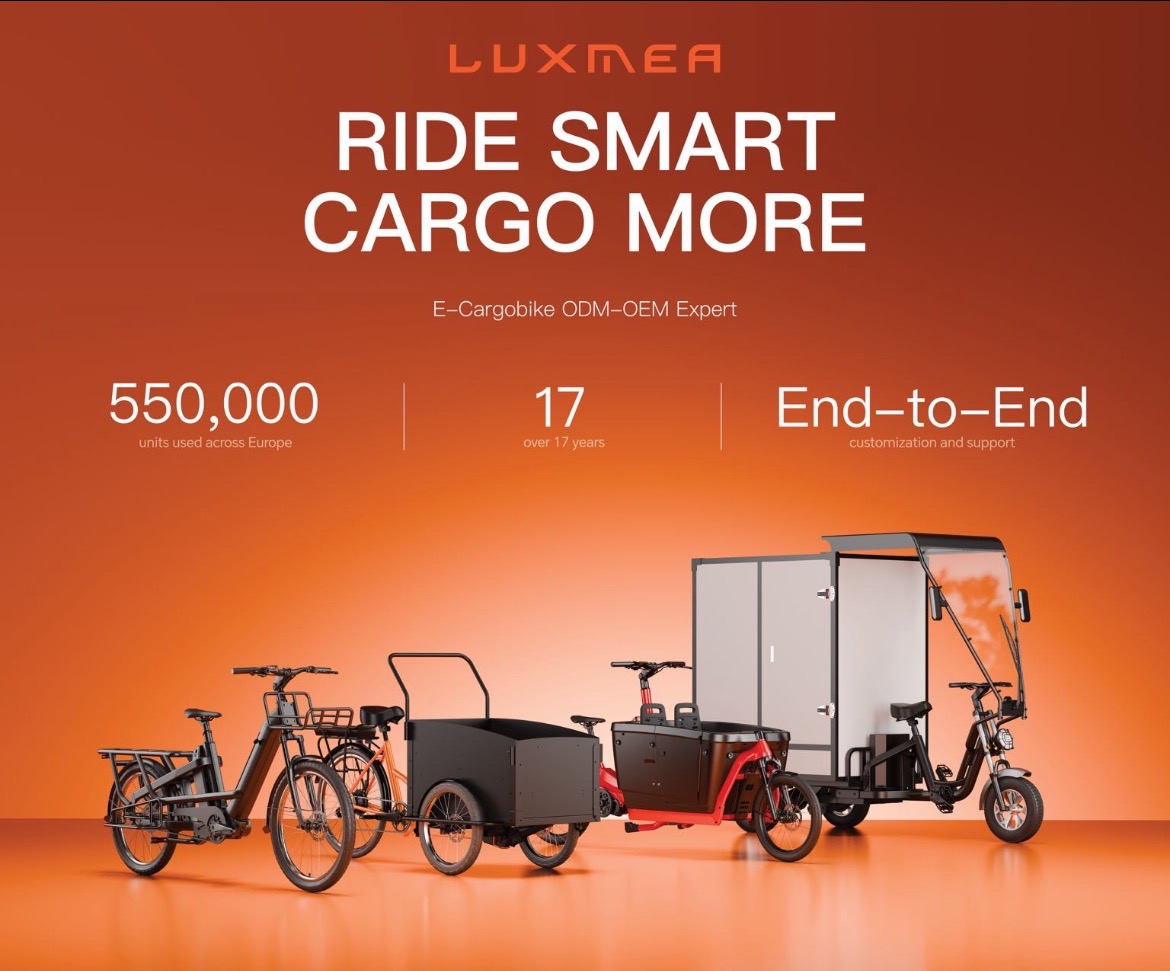
The electric cargo bike industry is one of the fastest-growing segments in urban mobility. Driven by booming e-commerce, tighter emission regulations, and the demand for greener cities, more companies are exploring e-cargo bikes as the future of logistics.
But while the market is expanding rapidly, one critical question remains for startups and established brands alike:
How do you choose the right manufacturing model—OEM or ODM—for your electric cargo bike business?
Making the right choice can determine whether your product is cost-effective, scalable, and future-proof—or stuck with delays and unnecessary costs.
OEM vs. ODM: What's the Difference?
Before diving into strategy, let's clarify the basics:
OEM (Original Equipment Manufacturer):
You provide the design concept, and the manufacturer produces the bikes based on your specifications.
Offers full control over features, branding, and technology integration.
Best suited for companies with strong design capabilities or specific innovation goals.
ODM (Original Design Manufacturer):
The manufacturer provides a ready-made design, which you can brand and customize.
Provides faster time-to-market and lower upfront R&D costs.
Ideal for new entrants or businesses testing a new market.
Which Model Should You Choose?
It depends on your goals, resources, and timeline.
Choose OEM if… You want to build a distinctive product identity, integrate advanced technologies, and establish long-term competitiveness. OEM makes sense for brands with a strong vision and market presence that value exclusivity.
Choose ODM if… You want to validate a market quickly, reduce costs, and avoid heavy R&D investments. ODM is often the smarter choice for startups, SMEs, or companies expanding cautiously into e-mobility.
Factors to Consider in Selecting a Partner
Product Quality & Safety Certifications: Check compliance with European standards like EN 15194 for e-bikes.
Ensure batteries, frames, and motors meet rigorous safety testing.
Supply Chain Strength: Does the partner secure key components like LFP batteries and mid-drive motors reliably?
Are spare parts easily available for after-sales service?
Scalability & Flexibility: Can they deliver small batches for pilot projects?
Do they have the capacity to scale up when your business grows?
Innovation Capabilities: Are they able to integrate new features like IoT connectivity, AI diagnostics, or chainless drivetrains?
Can they adapt to evolving policies and consumer demands?
After-Sales Support: Look for partners who provide warranty, maintenance training, and technical support—not just production.
Why the Right Partner Matters
Choosing between OEM and ODM isn't just a technical decision—it shapes your brand's ability to:
Compete on cost (lower TCO, reduced maintenance, efficient energy use).
Adapt to policy changes (zero-emission zones, subsidies, and urban transport regulations).
Build customer trust (reliable, safe, and sustainable vehicles).
The right partner becomes more than a supplier—they become part of your value chain and long-term growth strategy.
Luxmea: Your Trusted E-Cargo Bike Partner
Since 2008, Luxmea has been pioneering e-bike innovation in Europe. As the creators of the world's first in-tube battery e-bikes and early adopters in global e-sharing mobility, we've helped redefine what urban transport can be.
Our advantage lies in combining advanced engineering with design-driven thinking:
Next-generation frame architectures
Chainless hybrid drive systems for lower maintenance
IoT and AI-enabled diagnostics for smarter fleet management
LFP battery technology and global sourcing for reliability and scale
With a global supply chain across Europe, Taiwan, and China, and over 550,000 vehicles already on the road in Europe, we bring both speed and scale to our partners.
Develop tailored e-cargo bike solutions from concept to launch
Integrate cutting-edge technologies into their fleet
Scale with confidence thanks to end-to-end support
We're not just manufacturers—we're collaborators. Together, we co-create the future of green urban logistics.
Final Thought
Whether you're a startup testing the waters or an established brand looking to expand, the decision between OEM and ODM will shape your product's journey and your company's future.
The e-cargo bike market is about more than moving goods—it's about building sustainable, efficient, and innovative mobility solutions for tomorrow's cities.
The key is finding a partner who doesn't just build bikes, but builds possibilities with you.
FAQ
1: What's the difference between OEM and ODM for e-cargo bikes? A: OEM is custom manufacturing based on your own design, while ODM provides ready-made designs you can adapt and rebrand.
2: Which option is better for startups? A: ODM is usually better for startups—faster to launch and lower in cost. OEM is ideal for established brands seeking unique, fully customized solutions.
3: Why partner with Luxmea? A: With 15+ years of innovation, 550,000+ bikes in use, and advanced chainless and AI-driven tech, Luxmea delivers reliable OEM/ODM solutions with speed, scale, and end-to-end support.
In the future, we will continue to uphold the brand concept of "high-end quality、green travel and enjoy life", continue to innovate and forge ahead, and provide the global with higher quality cargo bike products and services.