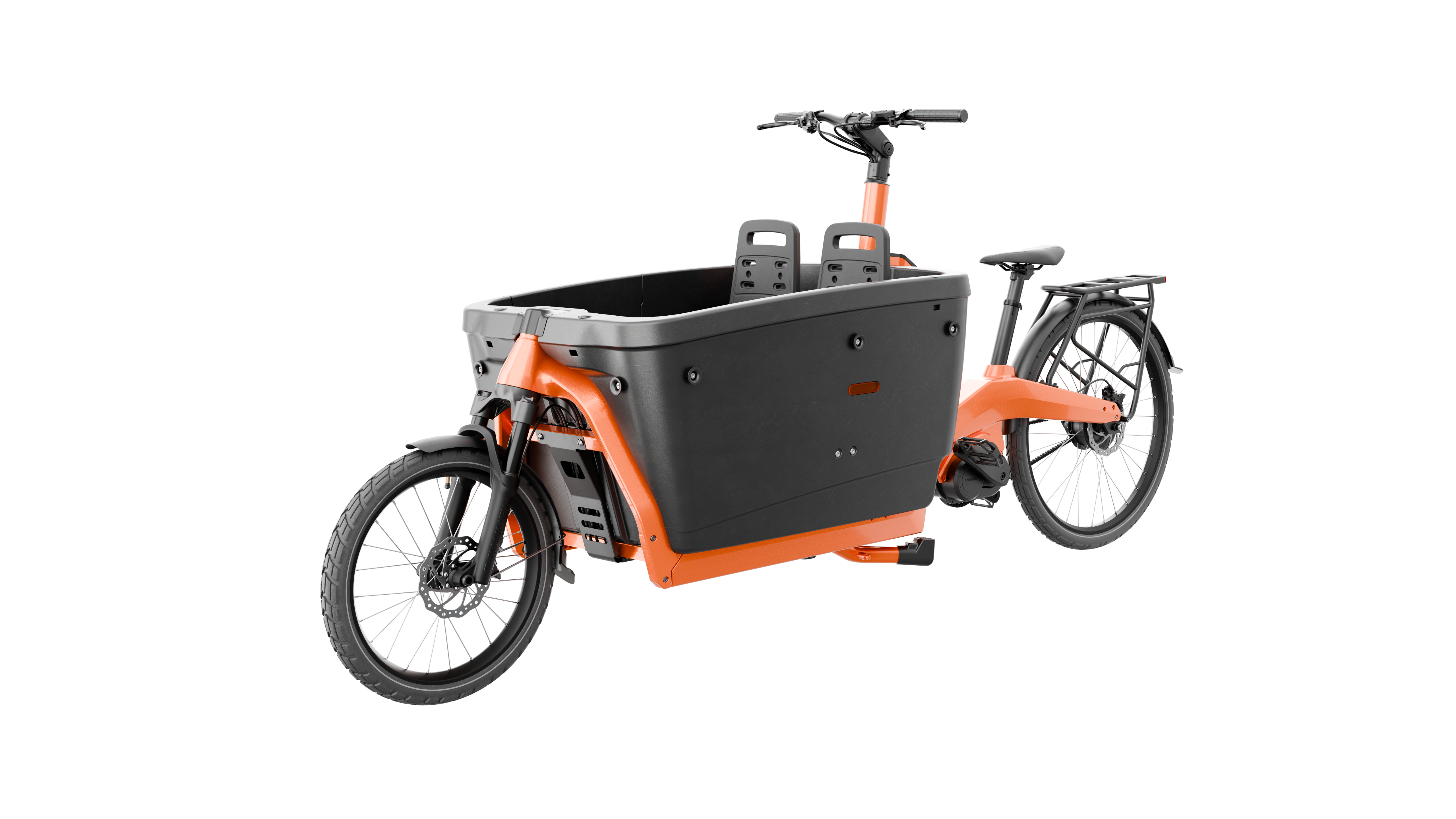
Rising operational costs and tightening urban emission zones make last-mile logistics increasingly difficult. Traditional vans often sit idling in gridlock. They waste fuel and lose valuable billable hours. Drivers circle blocks for parking, severely delaying local service calls and deliveries. You need a better way to navigate modern cities. Consumer-grade bikes simply fall short under heavy commercial use. However, a purpose-built Professional Cargo Bike offers a distinct economic and operational advantage. These robust vehicles navigate congested streets effortlessly. They park directly at delivery sites.
This transition is not just a green initiative. It represents a strategic move to improve your bottom line. We designed this article as a straightforward, evidence-based evaluation guide. Business owners and fleet managers will learn how to assess these vehicles. We explore payload limits, component durability, and fleet implementation tactics. Read on to discover if this transition makes sense for your specific daily operations.
Key Takeaways
Replacing traditional fleet vehicles with a professional cargo bike significantly reduces overall financial burdens through lower upfront costs, eliminated fuel expenses, and reduced insurance premiums.
Commercial-grade models offer specific engineering—such as higher payload capacities, heavy-duty components, and specialized cargo boxes—that standard consumer bikes lack.
Adoption comes with implementation realities; successful deployment requires planning for secure storage, rider training, and reliable commercial maintenance networks.
Local government incentives, tax write-offs, and urban parking exemptions increasingly accelerate the ROI of commercial electric cargo bike programs.
The Business Case: Framing the Last-Mile Problem
Urban logistics face a breaking point. City centers grow denser every year. Navigating these areas using traditional methods drains profitability. You must understand the specific operational friction points to evaluate alternative solutions accurately.
Urban Congestion and Route Inefficiency
Traditional delivery vans lose countless billable hours in traffic. Drivers often spend 15 to 20 minutes searching for commercial loading zones per stop. Sometimes they park blocks away from the actual destination. They must then carry heavy goods by hand. This physical strain slows them down further. Gridlock ruins delivery schedules. A van moving at five miles per hour cannot meet modern customer expectations. The route inefficiency directly caps the number of stops a driver completes in one shift.
Rising Fleet Costs
Operating internal combustion engine vehicles costs more than ever. Fuel prices fluctuate wildly, eating into tight profit margins. Commercial vehicle insurance premiums continue to rise. Routine automotive maintenance demands substantial budgets. You also face hidden expenses. Parking citations often become an unavoidable cost of doing business in busy downtown districts. When you compound these expenses, the financial drain becomes enormous.
Regulatory Pressures
Cities actively push motorized traffic out of their centers. Urban planners implement zero-emission zones. They close roads to gas-powered vehicles. They increase tolls for commercial vans. Regulatory pressures force businesses to adapt quickly. If you operate an older fleet, you may soon face steep daily fees just to enter certain city limits. Proactive adaptation is essential for survival.
Success Criteria
What does a successful logistics transition look like? You cannot simply buy bikes and hope for the best. You need measurable benchmarks. We define transition success using these key criteria:
Maintaining or increasing daily delivery drop rates.
Lowering the average cost-per-delivery over a 12-month period.
Reducing vehicle downtime and maintenance delays.
Improving driver satisfaction and retention.
Consumer vs. Professional Cargo Bikes: A Crucial Distinction
Many business owners make a critical mistake early on. They purchase standard consumer bikes to test the concept. Consumer bikes break quickly under heavy daily use. Commercial logistics demand purpose-built engineering.
Component Durability and Uptime
Consumer bicycles feature standard chains, basic derailleurs, and light-duty brakes. Manufacturers design them for weekend rides or light commuting. Professional models use commercial-grade drivetrains. They often feature carbon belt drives or internal gear hubs. These parts require far less daily maintenance. Couriers ride 8 to 10 hours every single day. They stop and start hundreds of times. This constant torque requires reinforced frames and heavy-duty four-piston hydraulic braking systems.
Downtime costs you money. A broken bike generates zero revenue. Buying a cheaper consumer bike results in negative returns due to frequent, costly repairs. You pay your rider to work, not to wait at a repair shop.
Payload and Volume Capabilities
Commercial operations require serious hauling power. A standard bicycle might safely carry 25 kilograms. A true commercial model handles 150 to 250 kilograms of cargo weight safely. Engineers design the frame geometry to maintain a low center of gravity. This keeps the vehicle stable even when fully loaded.
Modularity sets professional fleets apart. Standardized Eurobox compatibility allows warehouse workers to pre-pack containers. The rider simply slides the box onto the frame and locks it. You can install cold-chain inserts for food delivery. You can mount secure, lockable aluminum boxes for high-value parcel transit. This flexibility adapts directly to your specific business model.
Commercial Warranties and Service SLAs
Standard bike warranties explicitly void coverage if you use the product for commercial purposes. You need strong B2B warranties. You also need access to priority fleet maintenance. Relying on consumer bike shop queues means waiting weeks for a simple repair. Commercial manufacturers provide Service Level Agreements (SLAs). They guarantee parts availability and offer mobile mechanic networks. They understand that your vehicle must return to the road immediately.
Feature
Consumer Cargo Bike
Professional Cargo Bike
Daily Usage Limit
1-2 hours / intermittent
8-10 hours / continuous shift
Payload Capacity
Up to 100 kg (including rider)
150 kg - 250 kg (cargo only)
Drivetrain
Standard chain & derailleur
Belt drive & heavy-duty internal gearing
Braking System
2-piston hydraulic or mechanical
4-piston commercial hydraulic discs
Warranty Type
Recreational (voided by B2B use)
Commercial fleet coverage (SLAs included)
Core Benefits of Deploying an Electric Cargo Bike Fleet
Switching your local routes to micromobility solves multiple problems simultaneously. The benefits span financial savings, operational speed, and public relations. Let us break down exactly how an Electric Cargo Bike improves daily business functions.
Financial and Tax Advantages
The immediate expense reduction is staggering. Fuel costs drop to zero. Charging a high-capacity battery costs just pennies per day. Maintenance overhead shrinks significantly. You no longer pay for oil changes, transmission flushes, or expensive automotive diagnostics. You also eliminate parking fees and parking fines entirely.
Many local governments want businesses to adopt green logistics. They offer substantial purchase subsidies and commercial fleet grants. Small businesses can often utilize specific tax write-offs for purchasing zero-emission equipment. These incentives drastically shorten the payback period for your new equipment.
Operational Agility and Speed
Agility defines modern urban delivery. Bikes utilize protected cycle lanes. They physically bypass miles of gridlocked cars. A courier rides directly to the front door of an office building. They do not circle the block. They do not walk three blocks carrying a heavy package.
Evidence-backed scenarios prove this advantage. In dense urban environments, door-to-door delivery speed via cycle often exceeds traditional vans by 30 to 40 percent. Your riders complete more drops per hour. They cover short distances much faster than an automotive counterpart ever could.
Brand Perception and ESG Compliance
Consumers care about how companies operate. Visible, zero-emission logistics provide immense brand value. A beautifully branded, quiet, clean vehicle riding through a neighborhood generates goodwill. It shows the community you care about noise pollution and air quality.
This approach aligns perfectly with corporate Environmental, Social, and Governance (ESG) goals. Large municipal clients and corporate partners increasingly require vendors to prove their sustainability efforts. Deploying a green fleet helps you win contracts. It keeps you compliant with local environmental mandates.
Implementation Realities: Navigating Risks and Trade-Offs
We must present a balanced view. Transitioning away from vans introduces new operational realities. You must manage specific risks to ensure success.
Weather and Rider Safety
You will operate in extreme weather. Rain, snow, and severe heat impact rider comfort and efficiency. You must invest in proper gear. High-quality waterproof clothing, heated grips, and specialized footwear are mandatory. Many professional models offer weather-proof canopies. These shields protect the rider from wind and rain. You must also implement strict safety training. Navigating wet city streets carrying 200 kilograms requires advanced handling skills. Do not send untrained staff into busy traffic.
Theft and Secure Storage
Theft represents your highest operational risk. Criminals target high-value batteries and the vehicles themselves. You cannot leave these vehicles parked outside overnight. You require secure, indoor storage facilities. We highly recommend integrating GPS tracking directly into the frame. You should mandate heavy-duty locking protocols during daily routes. Riders must remove the key and lock the wheels at every single drop. Removing batteries during overnight storage deters thieves effectively.
Route and Topography Limitations
Be transparent about where this solution fails. Micromobility does not fit every scenario. They fail in low-density suburban sprawl where stops sit miles apart. They cannot handle highway transit. Extreme elevation changes pose a massive challenge. Riding up steep hills fully loaded drains batteries incredibly fast. Unless you implement adequate battery swapping infrastructure along the route, mountainous cities require careful route planning. Keep these vehicles in high-density, relatively flat urban zones for maximum efficiency.
Follow these numbered steps to mitigate deployment risks:
Audit your current daily delivery radius and map out high-density clusters.
Secure indoor, ground-level parking facilities with dedicated charging outlets.
Procure heavy-duty commercial locks and mandate security training.
Source local B2B mobile mechanics to establish preventative maintenance schedules.
Invest in high-visibility, all-weather gear for your riding staff.
How to Evaluate and Shortlist a Professional Cargo Bike
Choosing the right equipment determines your project's success. You must align technical specifications with your distinct business outcomes. Different models serve completely different operational needs.
Aligning Specs with Business Outcomes
You must balance volume versus weight. Analyze your typical cargo profile. Do you transport heavy toolboxes, or do you move bulky but light flower arrangements? Your cargo profile dictates the frame style.
Vehicle Style
Design Characteristics
Best Business Use Case
Long-John (Front-Loader)
Cargo box sits low in front of the rider. Excellent center of gravity.
Three wheels, massive rear cargo box. Very stable at slow speeds.
High-volume parcel logistics, mobile coffee carts, heavy industrial parts.
Battery Management and Range
A dead battery stops operations instantly. Standard ranges vary heavily based on cargo weight and pedal assist levels. Evaluate models featuring dual-battery systems. These double your operational range. Look for hot-swappable battery networks. A rider can pull into a hub, swap a depleted battery for a fully charged one, and leave in two minutes. This ensures uninterrupted shift work. Never compromise on battery capacity when hauling heavy commercial loads.
Fleet Management Software (Telematics)
Modern fleets run on data. Discuss Internet of Things (IoT) integration with your manufacturer. Telematics software tracks the exact location of your vehicles. It monitors battery health remotely. It tracks rider behavior, logging harsh braking or excessive speeds. You use this data to optimize route planning. Software alerts you when a vehicle needs preventative maintenance. This level of oversight is crucial when managing multiple riders across a large city.
Conclusion
Professional cargo bikes are not a passing novelty. They act as highly pragmatic operational tools for high-density business models. They bypass traffic, eliminate parking fines, and drastically reduce daily operating expenses. They keep your business moving when traditional vans sit stuck in gridlock.
Take actionable next steps today. Audit your current delivery routes. Identify one high-density, highly congested zone. Set up a small-scale pilot opportunity by replacing just one van. Request a commercial demonstration from reputable manufacturers. Ask for a detailed SLA breakdown regarding maintenance and parts availability. Start small, measure the data carefully, and scale your fleet as you prove the concept in your own territory.
FAQ
Q: Can an electric cargo bike replace a commercial van entirely?
A: Yes, but only for high-density, low-volume routes. They excel in urban centers where parking is impossible. However, they cannot replace vans for long-haul highway transit or transporting massive industrial materials. Businesses often achieve the best results using a mixed-fleet approach, utilizing vans for hub-transfers and bikes for the last mile.
Q: Do riders need a special license or commercial insurance?
A: Regulations vary locally. Most jurisdictions do not require a special driver's license for micromobility vehicles. However, you strictly need specialized commercial liability insurance. Standard policies do not cover business operations. You must also secure specific theft insurance to protect your high-value assets and batteries.
Q: How long do commercial electric cargo bike batteries last during a shift?
A: Loaded weight and topography dictate range. A heavily loaded vehicle typically travels 20 to 40 miles per charge. To ensure full-day, uninterrupted operations, businesses must use dual-battery setups or hot-swappable battery systems. Riders can swap depleted units for fresh ones mid-shift without losing time.
Q: What happens when a professional cargo bike needs maintenance?
A: You should avoid standard retail bike shops. They lack the parts and urgency required for fleet management. You must partner with B2B mobile fleet mechanics or use the manufacturer's dedicated SLA network. These commercial partners prioritize fast turnaround times, ensuring your vehicle returns to the road immediately.
In the future, we will continue to uphold the brand concept of "high-end quality、green travel and enjoy life", continue to innovate and forge ahead, and provide the global with higher quality cargo bike products and services.