High-density urban environments heavily erode the profit margins of traditional van-based last-mile delivery. Traffic congestion traps delivery drivers for hours. Hefty parking fines accumulate rapidly during daily operations. Constant engine idle times drain financial resources silently. Delivery fleets face a growing crisis as these compounding delays drive up logistical costs exponentially. Managers watch their per-drop profitability shrink daily.
Concurrently, shifting municipal regulations demand rapid fleet adaptation. Urban planners across major global cities now enforce strict zero-emission zones. Evolving logistics frameworks compel operations directors to evaluate micro-mobility alternatives immediately. You cannot afford to ignore these legislative shifts. Doing so risks total exclusion from key urban markets.
Fortunately, a Professional Cargo Bike provides a highly robust solution. It never functions as a mere consumer novelty. Rather, it serves as a specialized commercial vehicle. Engineers meticulously designed it to bypass urban gridlock completely. Integrating these agile vehicles reduces your cost-per-delivery substantially. Furthermore, you will meet strict compliance mandates effortlessly when you pair them proper localized infrastructure. Let us explore the mechanics of this transformation.
Key Takeaways
Cost Efficiency: Replaces traditional van expenses (fuel, parking citations, insurance) with lower operational expenditures.
Route Optimization: Bypasses traffic congestion by utilizing bicycle infrastructure, increasing hourly drop rates in dense zones.
Hardware Distinctions: True professional models feature reinforced frames, high-torque motors, and standardized payload volumes (e.g., Euro-pallet compatibility) distinct from consumer e-bikes.
Implementation Reality: Successful deployment requires localized micro-hubs and updated routing software; it is a structural fleet shift, not a 1:1 van replacement.
The Financial Case: Why Vans Are Losing Urban Efficiency
Fleet managers understand the compounding costs plaguing traditional delivery vans. Idling fuel burns through daily operational budgets rapidly. Unpredictable traffic delays disrupt strict delivery windows constantly. Furthermore, commercial parking scarcity forces drivers into highly difficult choices. They often circle city blocks endlessly searching for loading zones. Sometimes they park illegally out of sheer necessity. These actions result in massive parking fines. Such penalties destroy route profitability completely. A single citation can erase the margin of twenty successful package drops in one afternoon.
We must examine cost-per-drop economics closely. Utilizing an Urban Cargo Bike completely eliminates the desperate search for parking spots. Couriers can roll directly up to a retail storefront. They seamlessly enter apartment building lobbies. This unhindered access dramatically reduces walking time from the vehicle to the final door. Consequently, you directly increase the number of successful deliveries achieved per hour. In a dense two-to-three-mile radius, bikes consistently outperform conventional vans. They utilize dedicated cycle lanes seamlessly. They bypass stalled traffic entirely. The result is a highly predictable, mathematically sound delivery operation.
Regulatory pressures also mount daily. Inaction carries severe financial risks. Major municipalities worldwide actively implement zero-emission zones. Congestion pricing models penalize heavy commercial vehicles heavily. Urban planners also restrict daytime delivery windows strictly. You must pivot your fleet strategy now. Failing to adapt guarantees locked-out routes. It ensures lost market share to more agile competitors. Environmental compliance is no longer an optional public relations exercise. It dictates your sheer ability to access your customer base.
Delivery Metric Comparison: Vans vs. Commercial Micro-mobility
Delivery Metric
Traditional Delivery Van
Commercial Micro-mobility
Parking Search Time
10-15 minutes per stop
0-2 minutes per stop
Hourly Drop Rate
Low (Heavy traffic impact)
High (Bypasses traffic congestion)
Compliance Risk
High (Emissions/Parking fines)
Zero (Eco-friendly/Agile)
Energy Expenditure
High (Diesel or Gasoline)
Extremely Low (Electricity)
Consumer E-Bike vs. Professional Cargo Bike: Key Evaluation Criteria
Procurement teams must clearly distinguish between solution categories. Consumer or family models serve entirely different purposes. They handle light groceries or school runs exceptionally well. However, they buckle under the intense stress of continuous commercial use. A true Professional Cargo Bike represents heavy-duty fleet hardware. Understanding this distinction establishes internal credibility. It also guides intelligent procurement decisions accurately. We must evaluate these vehicles using rigorous commercial standards. Do not compromise on structural integrity.
Payload, Volume, and Modularity
You need strict baseline commercial requirements. Consumer bikes rarely support heavy freight securely. Conversely, commercial units routinely boast 150kg to 350kg payload capacities. Their front or rear cargo boxes offer 1000L or more in volume. Some advanced models accommodate standard Euro-pallets seamlessly. This capacity transforms them into legitimate freight vehicles.
Modularity plays a crucial role in modern logistics. You cannot rely on a single box design for diverse clients. Top-tier units offer interchangeable modules designed for specific freight types.
Temperature-controlled boxes for sensitive grocery or pharmaceutical deliveries.
Lockable standardized containers to prevent opportunistic street theft.
Flatbed configurations to handle oversized or uniquely shaped parcels.
Shelving units designed for sorted postal or courier documents.
These modular options allow fleets to serve multiple industry sectors efficiently. You swap the container rather than replacing the entire vehicle. This keeps your capital working constantly.
Drivetrain and Durability Standards
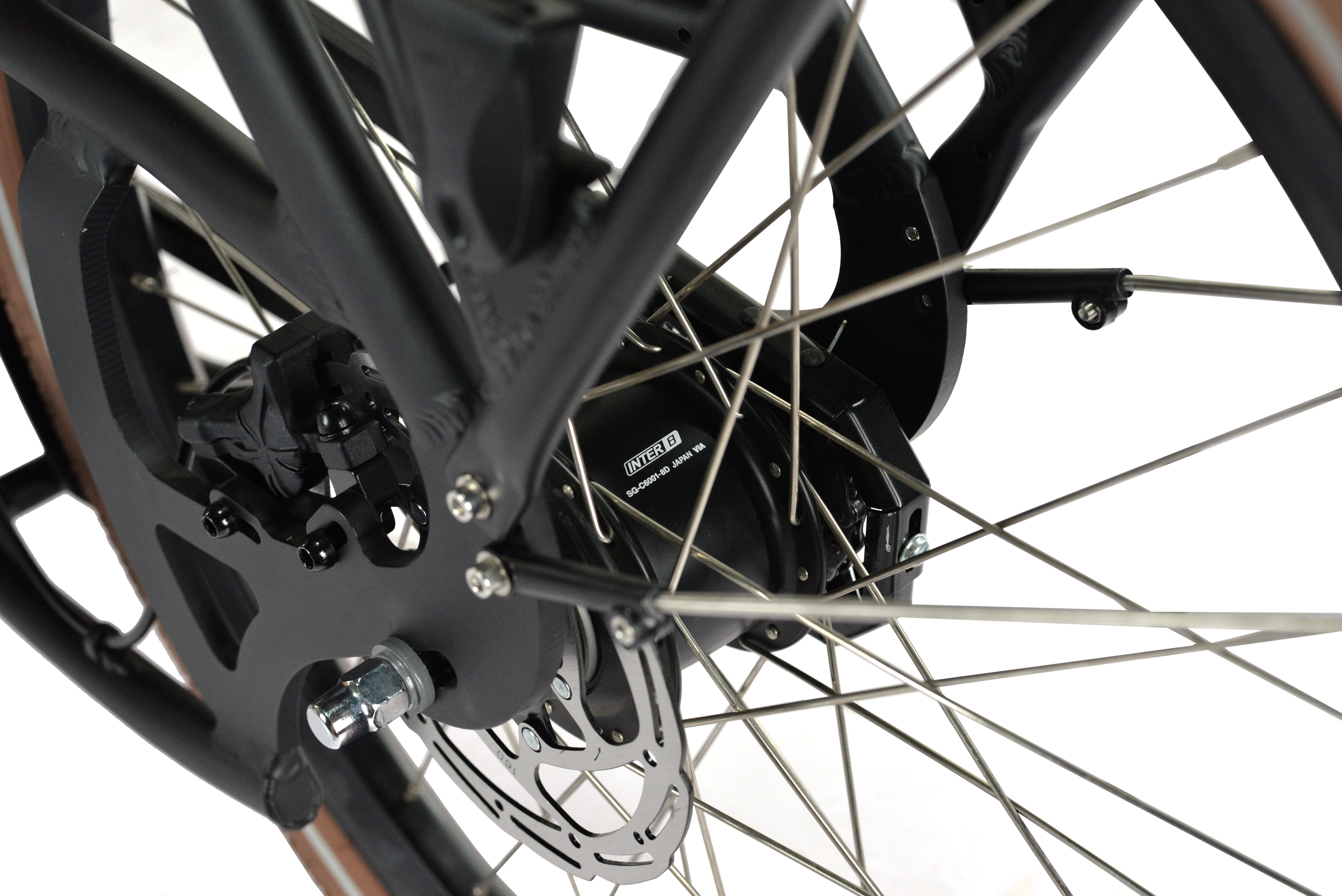
Commercial operations demand robust drivetrain components. Standard bicycle parts wear out quickly under 300kg loads. You must require heavy-duty hydraulic disc brakes. They ensure reliable stopping power during sudden urban emergencies. Quad-piston calipers offer superior heat dissipation. High-torque mid-drive motors are equally essential. They typically deliver 85Nm to 112Nm of torque. They push heavy payloads up steep inclines effortlessly. Mid-drive systems distribute power through the gears much better than basic hub motors.
Reinforced wheels prevent frequent spoke breakages. Puncture-resistant tires withstand urban glass and debris. Ultimately, commercial-grade parts minimize catastrophic fleet downtime. Power management also dictates operational success. You should look for dual-battery systems. These setups guarantee full-shift reliability. Couriers can easily complete an eight-hour shift. They avoid frustrating mid-day charging delays entirely. Swappable batteries keep the wheels turning continuously. You charge depleted cells back at the hub while the courier continues riding seamlessly.
Addressing Operational Risks and Implementation Realities
Adopting micro-mobility requires profound systemic changes. You must confront operational risks honestly. Let us address core infrastructure assumptions first. Cargo cycles simply cannot operate using standard warehouse-to-door models. Traditional warehouses sit far outside city limits. Biking twenty miles before starting a route destroys efficiency entirely. Instead, you require decentralized urban micro-hubs. Cross-docking stations placed strategically within the city center allow rapid reloading. Vans drop bulk goods at the hub overnight. Bikes handle the final three miles during daytime hours. This relay system maximizes the strengths of both vehicles.
We must also acknowledge the critical human element. Weather and rider safety require substantial investments. Rain, snow, and extreme heat affect exposed couriers drastically. You must protect your workforce proactively.
Invest in high-quality, breathable, waterproof rider gear suitable for all seasons.
Install physical weather canopies on the cycles to shield operators during severe storms.
Provide intensive safety training focused on interacting safely around heavy truck traffic and identifying blind spots.
Well-protected riders maintain high morale. They also sustain faster delivery speeds throughout harsh seasons. Staff retention improves significantly when you prioritize operator comfort and physical safety.
Asset security presents another major hurdle. High-value fleet assets attract theft and vandalism constantly. You must evaluate comprehensive security measures immediately. Integrate GPS fleet tracking natively. This technology monitors vehicle locations in real time. Managers can set geofencing alerts easily. IoT integration provides remote motor-locking capabilities. Secure, tamper-proof cargo enclosures protect the clients' valuable packages. You cannot leave asset protection to chance. Electronic locks synced to courier smartphones add an excellent layer of security.
Measuring ROI and Scaling an Urban Cargo Bike Fleet
Scaling your operations demands rigorous financial evaluation. You must compare upfront capital expenditures against long-term operational expenditures. Purchasing a commercial cycle requires noticeably less initial capital than buying a new electric delivery van. Furthermore, the daily operational expenditure drops significantly. You eliminate diesel fuel completely. Insurance premiums generally cost much less. Maintenance schedules involve cheaper replacement parts. When calculating ROI, these daily savings accumulate rapidly. Over a few short months, the financial returns become highly compelling. You achieve break-even much faster than traditional vehicular investments.
Software plays a massive role in successful scaling. You cannot rely on legacy van routing systems. Those platforms direct drivers onto highways and wide boulevards. Instead, scaling requires specialized fleet management software. Advanced routing algorithms must factor in dedicated bike lanes. They need to route couriers through restricted pedestrian zones legally. Furthermore, the software must account for micro-hub reloading times. A proper digital infrastructure ensures every Urban Cargo Bike reaches its absolute maximum efficiency. Dynamic dispatching sends riders on the most logical, time-saving paths available.
Vendor shortlisting logic requires careful thought. Do not focus solely on the cheapest upfront price. Instead, prioritize comprehensive local support. Cheap imports often lack replacement parts entirely. This leads to vehicles gathering dust in your depot.
Vendor Shortlisting Strategy Chart
Evaluation Criteria
Subpar Vendor Profile
Ideal Vendor Profile
Maintenance Support
Mail-in parts only, DIY repair required
Local Service Level Agreement (SLA)
Warranty Terms
1-year limited frame only
Multi-year comprehensive coverage
Parts Availability
Overseas shipping (Takes Weeks)
Local warehousing (Takes Days)
Hardware Adaptability
Fixed box, single configuration
Modular rails, multi-box support
Strong local SLAs guarantee rapid repairs. Excellent warranty terms protect your investment long-term. Immediate parts availability keeps your fleet on the road continuously. Choose partners heavily invested in commercial durability.
Conclusion
A transition to micro-mobility requires vision and precise strategy. We can draw several powerful conclusions from modern urban logistics. Professional units operate as highly efficient tools within dense, highly regulated urban centers. They bypass heavy traffic, eliminate parking fines, and boost hourly delivery rates predictably. However, success depends entirely on utilizing localized micro-hubs and specialized fleet routing software. Commercial-grade durability and intelligent modularity separate true fleet vehicles from basic consumer models.
Your next step requires immediate, calculated action. Do not attempt a massive fleet overhaul blindly. Instead, initiate a highly localized pilot program. Deploy one or two commercial cycles alongside a temporary urban micro-hub. Gather hard, localized data regarding route times and successful drop rates. Analyze rider feedback extensively. Use this empirical evidence to refine your logistical strategy before executing a full-scale rollout. Careful testing prevents expensive strategic mistakes.
FAQ
Q: What is the maximum payload of a professional urban cargo bike?
A: Realistic payload ranges typically fall between 150kg and 350kg. The exact capacity depends heavily on the vehicle's specific design. A standard two-wheel Longjohn model handles the lower end perfectly. Conversely, heavy-duty commercial trikes or advanced quadricycles easily support over 300kg. Always verify the manufacturer specifications against your daily freight needs.
Q: Do operators need a commercial driver’s license to ride a cargo bike?
A: In most jurisdictions, operators do not need a commercial driver’s license. This legal exemption significantly broadens your potential hiring pool. You can recruit couriers much faster. However, you must remain aware of local regulations. Many cities enforce specific e-assist speed caps and strictly monitor motor wattage limits for compliance.
Q: How do fleets handle maintenance for commercial cargo bikes?
A: Successful fleets rarely rely on ad-hoc repairs at local retail bike shops. Instead, they shift toward structured Business-to-Business (B2B) Service Level Agreements (SLAs). Fleet managers contract directly with manufacturers or specialized fleet maintenance providers. These strict agreements guarantee rapid part replacements and priority servicing, ensuring absolute minimal vehicle downtime.
In the future, we will continue to uphold the brand concept of "high-end quality、green travel and enjoy life", continue to innovate and forge ahead, and provide the global with higher quality cargo bike products and services.