For decades, speed has been the default metric of transportation progress. Faster vehicles, shorter travel times, higher top speeds—these were seen as signs of innovation. But as cities enter 2026, that mindset is quietly breaking down.
Across Europe and other dense urban regions, the real mobility advantage is no longer about moving as fast as possible. It's about moving consistently, safely, and predictably. In an increasingly complex urban environment, predictable mobility is proving far more valuable than raw speed.
The Limits of Speed in Modern Cities
Urban mobility today operates under constraints that didn't exist 20 years ago. Streets are narrower, regulations are tighter, and public tolerance for risk is lower. Adding more speed into this system doesn't create efficiency—it often creates friction.
Fast-moving vehicles amplify:
Safety risks for pedestrians and cyclists
Traffic conflicts at intersections
Enforcement challenges for city authorities
Insurance and liability exposure for operators
In practice, speed becomes unreliable. A vehicle capable of 45 km/h may still average 15 km/h during peak hours, stop-start traffic, or regulated zones. From a planning and logistics perspective, that variability is a liability.
Predictability Is the New Efficiency Metric
Predictable mobility is not about being slow. It's about knowing what will happen next.
For fleet operators, municipalities, and city planners, predictability means:
Consistent travel times across different days and conditions
Stable vehicle behavior under load and in mixed traffic
Clear alignment with legal speed limits and infrastructure design
A vehicle that reliably travels at 25 km/h, integrates smoothly with bike lanes, and stops exactly as expected is often more productive than a faster alternative that must constantly adjust to constraints.
Efficiency is no longer measured by peak speed—it's measured by operational certainty.
Why Cities Are Designing for Predictable Flow
Urban planning in 2026 increasingly focuses on flow management, not acceleration. Cities are optimizing for smoother interactions between different users: pedestrians, cyclists, delivery vehicles, public transport, and emergency services.
Predictable mobility supports this approach by:
Reducing conflicts at intersections
Lowering cognitive load for all road users
Making enforcement simpler and more consistent
This is one reason why many European cities favor vehicles that stay within well-defined performance envelopes. Predictable acceleration, braking, and top speed allow planners to design streets that work as systems—not racetracks.
The Role of Commercial Fleets
Nowhere is the shift more visible than in commercial transport.
Last-mile delivery, municipal services, and shared mobility fleets depend on schedules, not speed records. A delivery window missed by five minutes can be more costly than a slower vehicle that always arrives on time.
Fleet operators increasingly prioritize:
Vehicles with stable power delivery
Braking systems that behave consistently under load
Energy consumption that can be accurately forecast
Fast vehicles introduce too many variables: higher wear, unpredictable energy use, and greater safety oversight. Predictable mobility simplifies planning, maintenance, and training—especially in multi-driver environments.
Safety as a System Property
Speed focuses on what a vehicle can do. Predictability focuses on what a vehicle will do.
This distinction matters for safety. Predictable systems:
Respond the same way every time
Allow drivers to build accurate expectations
Reduce the chance of sudden, extreme behavior
In dense urban traffic, safety is collective. When vehicles behave consistently, other road users adapt naturally. When they don't, accidents happen—not because of recklessness, but because of surprise.
That's why technologies like torque-controlled motors, fail-safe braking, and speed-limited assistance are gaining traction. They trade excitement for trust—and cities value trust.
Regulation Is Catching Up with Reality
Regulators are increasingly aligned with this thinking. Speed caps, geofencing, and assisted-speed limits are becoming standard tools, not temporary restrictions.
Rather than fighting these rules, many forward-looking mobility providers are designing vehicles around predictability from the start. This approach avoids costly retrofits and compliance conflicts later.
In 2026, regulatory compliance is not a constraint—it's a competitive advantage.
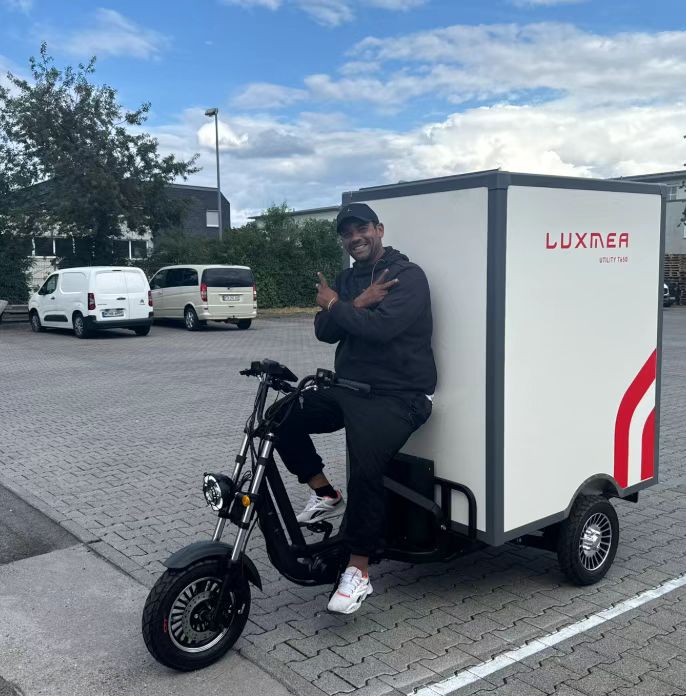
Predictable Mobility Scales. Fast Mobility Doesn't.
The most important difference between predictable and fast mobility is scalability.
Fast solutions may work in isolated cases, pilot projects, or controlled environments. Predictable solutions work at city scale.
They:
Integrate into existing infrastructure
Support large, diverse user groups
Remain viable as regulations evolve
This is why cities and operators increasingly favor vehicles that are "boringly reliable." They don't draw attention—but they keep systems running.
Conclusion: Redefining Progress
In 2026, mobility progress isn't defined by how fast something moves. It's defined by how well it fits into the urban ecosystem.
Predictable mobility reduces friction, increases safety, and enables long-term planning. It supports cities that are denser, more regulated, and more human-centered than ever before.
Speed will always have its place. But in the cities of tomorrow, predictability is what keeps everything moving.
FAQ
1: What does "predictable mobility" meanin practice?
A: It means transportation systems that deliver consistent travel times, stable vehicle behavior, and clear compliance with urban regulations—so cities and operators know what to expect every day.
2: Why is predictable mobility more valuable than speed in cities?
A: Because in dense urban environments, reliability and safety matter more than top speed. Predictable mobility reduces risk, simplifies planning, and scales better across city-wide operations.


