As the global transition toward sustainable urban logistics accelerates, the performance expectations of e-cargo bikes and light electric vehicles (LEVs) continue to rise. Operators are no longer satisfied with large batteries alone—they require vehicles that deliver consistent, predictable, and long-lasting efficiency in demanding real-world environments.
While battery capacity initially dominated industry discussions on range, the focus is now shifting toward a far more influential factor:
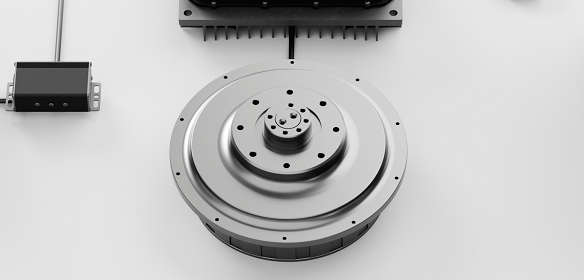
the efficiency and architecture of the drivetrain—especially the Rear Axle Motor system.
Rear Axle Motor technology has quickly emerged as a key enabler of stable long-range performance. Companies such as LUXMEA, known for engineering fleet-oriented, reliability-focused mobility systems, have embraced this architecture to support next-generation commercial electric mobility.
This article provides a technical and industry-focused analysis of why Rear Axle Motors are becoming central to high-efficiency LEV platforms.
1. Redefining Efficiency Through Drivetrain Architecture
Traditional hub motors and mid-drive motors both have strengths, but they also introduce energy losses—either through complex mechanical pathways or increased gear friction. Rear Axle Motors approach the problem differently.
Direct-Drive Power Path
By delivering torque directly through the rear axle, the system minimizes:
Mechanical transmission losses
Chain-related inefficiencies
Gear friction present in mid-drive designs
This direct architecture ensures higher energy conversion efficiency, meaning more usable power per watt-hour of battery capacity and significantly improved real-world range.
2. Optimized Low-Speed Torque for Commercial Loads
Commercial LEVs face operational conditions that differ dramatically from those of consumer e-bikes:
Frequent start–stop cycles
Heavy payload demands
Urban gradients and uneven surfaces
Continuous low-speed operation
Rear Axle Motors excel in these scenarios due to their efficient low-speed torque delivery.
High Torque with Lower Current Draw
Because power is applied where it is needed most—at the rear wheel—Rear Axle Motors:
Reduce peak current requirements during acceleration
Lower heat generation under load
Maintain high efficiency across varying terrain
This explains why logistics-oriented manufacturers, including LUXMEA, prioritize Rear Axle Motor systems for long-range, high-duty-use vehicles.
3. Durability and Reduced Total Cost of Ownership (TCO)
For fleet operators, the long-term cost and operational uptime of an LEV are as important as performance.
Rear Axle Motors deliver measurable advantages in durability:
Less Mechanical Stress
Mid-drive systems amplify chain tension, accelerating the wear of:
Chains
Sprockets
Cassettes
Rear Axle Motors avoid these issues entirely, leading to:
Longer component lifespan
Fewer workshop interventions
Lower overall maintenance costs
Enhanced Environmental Protection
With a compact and sealed motor housing, Rear Axle systems offer:
Superior water and dust resistance
Stable performance across weather conditions
Consistent functionality over thousands of operating hours
For fleet-oriented brands like LUXMEA, these durability characteristics directly support the goal of maximizing vehicle uptime and reducing lifetime service costs.
4. Predictable Energy Consumption: The Real Advantage
While absolute range numbers are important, predictability often matters more—especially for logistics operations where route planning and shift scheduling depend on reliable energy patterns.
Rear Axle Motors maintain a stable efficiency curve across:
Consistent Wh/km Performance
Operators benefit from:
More accurate route planning
Reduced mid-shift battery swapping
Linear and predictable State-of-Charge (SOC) behavior
Fewer operational disruptions
This consistency is one of the main reasons Rear Axle architecture is becoming a preferred choice in fleet-grade LEV applications.
5. Rear Axle Motor + Intelligent BMS: A High-Efficiency Ecosystem
The full potential of Rear Axle Motors is unlocked when paired with advanced battery management systems.
Synergy of Motor and Energy Intelligence
When combined with a smart BMS—such as those implemented in LUXMEA's fleet-designed battery platforms—the system achieves:
Optimized torque-to-power delivery
Improved thermal regulation
Reduced current stress at low temperatures
More accurate SOC/SOH predictions
Smoother and safer power distribution
This integrated approach can lead to:
10–25% increases in real-world range
Reduced battery degradation
More stable performance throughout the battery lifecycle
Rear Axle Motors, when supported by intelligent power management, represent a major step toward truly energy-efficient commercial mobility.
6. Industry Adoption: Why the Shift Is Accelerating
Across Europe and Asia, leading cargo-bike and LEV manufacturers are moving toward Rear Axle architecture for upcoming platforms. The reasons reflect broader industry needs:
Higher torque at low speeds
Smoother starts with heavy payloads
Compatibility with automatic shifting systems
Reduced chain and gear wear
Better integration with IoT fleet management tools
As cities adopt stricter emissions regulations and demand reliable last-mile delivery solutions, the role of efficient drivetrains will only grow.
Rear Axle Motor systems are well-positioned to meet these evolving demands—and companies like LUXMEA are strategically incorporating this architecture into their long-range commercial vehicle ecosystem.
Conclusion
Long-range performance is no longer solely defined by increasing battery capacity.
The industry is entering an era where drivetrain architecture and system-level efficiency determine true operational range.
Rear Axle Motor systems deliver:
Higher energy efficiency
Superior low-speed torque
Lower mechanical wear
More predictable energy consumption
Reduced long-term operating costs
For forward-thinking manufacturers and fleet operators, Rear Axle technology is rapidly becoming a foundational element of next-generation electric mobility.
By integrating this architecture into its product ecosystem, LUXMEA continues to advance high-efficiency, fleet-ready mobility solutions designed for the future of urban logistics.
FAQ
1: Why are rear axle motors more efficient?
A: They deliver power directly to the rear wheel, reducing mechanical losses and improving overall energy efficiency.
2: Why are rear axle motors ideal for cargo and fleet use?
A: They provide strong low-speed torque, handle heavy loads well, and reduce drivetrain wear—making them more reliable for daily commercial operations.


