For a long time, the cargo bike conversation centered on two-wheel models. They were lighter, easier to maneuver, and fit neatly into existing cycling infrastructure. But over the past few years, something has shifted.
Across Europe, multi-wheel cargo bikes — including three-wheelers and four-wheel electric cargo platforms — are growing faster than traditional two-wheel cargo bikes. This isn't a design preference or a temporary trend. It reflects deeper changes in urban logistics, regulation, and fleet economics.
The Cargo Bike Market Is Scaling Up
The European cargo bike market has been expanding at double-digit rates for several years. Germany alone recorded over 160,000 cargo bike sales in 2023, according to industry data, and the majority were electric. More telling is the change within that growth: commercial buyers now represent a rising share of total sales.
As e-commerce continues to expand — European online retail exceeded €900 billion in 2023 — last-mile delivery volumes are rising sharply. Logistics companies are under pressure to move more goods with fewer emissions and lower operating costs.
Two-wheel cargo bikes perform well in light urban delivery. But once daily payload increases and route density rises, many operators hit a practical ceiling. Multi-wheel cargo bikes, with payload capacities often exceeding 200 kg, allow fleets to consolidate deliveries into fewer trips. That improves route efficiency and lowers labor cost per parcel.
In other words, as delivery demand scales, vehicle capacity matters more.
Stability Is a Commercial Requirement
In consumer markets, agility sells. In commercial markets, stability wins.
A fully loaded two-wheel cargo bike can be challenging to balance, especially in stop-and-go traffic. For experienced riders, this is manageable. For fleet operations hiring at scale, it becomes a training and safety issue.
Multi-wheel cargo bikes provide inherent stability when stationary and under load. They reduce the risk of tip-overs and make loading and unloading faster. For fleet managers, fewer accidents mean lower insurance costs and less downtime.
This matters more than it might seem. When a delivery vehicle operates two shifts per day, even small reductions in incident rates translate into measurable cost savings over time.
Urban Regulations Are Driving the Shift
More than 300 European cities now operate low-emission or zero-emission zones. Diesel vans are gradually being restricted from dense urban cores. Cities like Paris, Amsterdam, and Berlin are tightening access rules year by year.
Cargo bikes are emerging as practical replacements for light commercial vehicles in these areas. But replacing a van requires more than just adding electric assist to a bicycle.
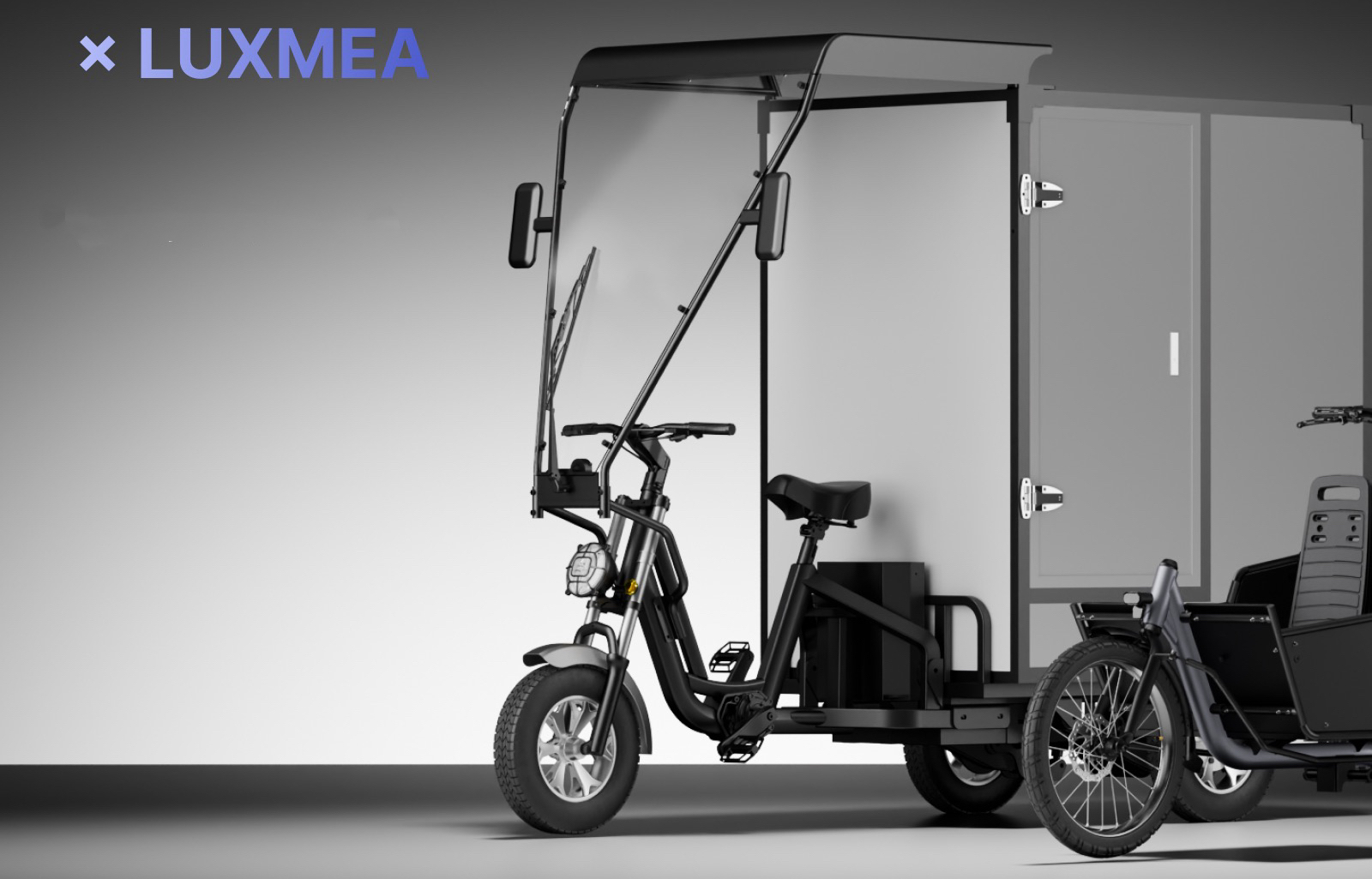
Multi-wheel cargo bikes offer enclosed cargo modules, higher gross vehicle weight ratings, and greater structural durability. For many urban routes under 10–15 kilometers, they can realistically substitute small vans — especially when paired with micro-distribution hubs.
Two-wheel models remain valuable. However, for professional urban logistics operations, the larger platform of a multi-wheel commercial cargo e-bike is often better aligned with regulatory realities.
Fleet Economics Favor Durable Platforms
Total Cost of Ownership (TCO) is central to fleet decision-making. While multi-wheel cargo bikes typically involve higher upfront investment, their durability under heavy use often offsets the difference.
Commercial delivery fleets can cover 60–100 kilometers per vehicle per day. Under that workload, component stress increases significantly. Multi-wheel platforms distribute load more evenly across the chassis and braking systems. Some modern designs integrate regenerative braking or generator-based drivetrains, reducing mechanical wear.
Over time, lower maintenance frequency and fewer structural failures improve uptime. For a large electric cargo bike fleet, uptime directly impacts profitability.
Electrification and Connectivity Are Changing Expectations
Today, more than 90% of cargo bikes sold in major European markets are electric. Electrification has shifted the category from "bicycle with assist" to "light electric utility vehicle."
Multi-wheel cargo bikes provide more physical space for larger battery systems, telematics modules, and remote diagnostics hardware. As fleet operators demand connectivity — battery monitoring, route optimization, predictive maintenance — integration capacity becomes important.
The structural layout of multi-wheel platforms makes them better suited for these integrated systems. As urban logistics becomes increasingly data-driven, this technical flexibility gives them an edge.
Infrastructure Is Slowly Catching Up
One long-standing concern has been size. Multi-wheel cargo bikes require more space than traditional bicycles. However, city infrastructure is evolving. Dedicated cargo bike lanes, expanded cycle paths, and urban consolidation centers are becoming more common.
A European transport study in 2022 suggested that up to 25% of urban goods deliveries could potentially shift to cargo bikes. Achieving that share will require platforms capable of meaningful freight volumes. Multi-wheel models are better positioned to meet that threshold.
A Structural Market Evolution
Two-wheel cargo bikes are not disappearing. They remain ideal for agile, lighter-duty applications and family mobility. But the faster growth of multi-wheel cargo bikes signals a broader evolution.
Urban freight is professionalizing. Vehicles are being evaluated not as lifestyle products, but as tools within a logistics ecosystem. Capacity, stability, durability, and digital integration are becoming primary purchase criteria.
As cities tighten emission standards and delivery volumes continue to rise, the demand for scalable, heavy-duty electric cargo solutions will likely continue to grow.
Multi-wheel cargo bikes are expanding the category — and in doing so, they are setting the pace for its future.
FAQ
1. Are multi-wheel cargo bikes better for commercial use?
A: In many urban logistics scenarios, yes. Multi-wheel cargo bikes offer higher payload capacity, better stability under heavy loads, and improved safety during stop-and-go deliveries. For professional last-mile delivery operations, they often provide lower total cost of ownership compared to lighter two-wheel cargo bikes operating at high intensity.
2. Why are multi-wheel cargo bikes growing faster than two-wheel models?
A: The growth is largely driven by urban regulations, rising e-commerce volumes, and fleet demand for higher efficiency. As cities restrict diesel vans and delivery density increases, operators need cargo bikes that can carry more per trip while remaining stable and durable. Multi-wheel electric cargo bikes are better suited for this scaling phase of urban logistics.


