An in-depth analysis of trends reshaping the continent's fastest-growing mobility segment.
Europe's e-cargo bike market is undergoing one of the most significant transformations in today's urban mobility industry. What started as a niche category for families and eco-conscious consumers has evolved into a core component of last-mile logistics, municipal services, and commercial fleet operations.
As demand surges, competition is intensifying — not only among long-established European bicycle manufacturers, but also among automotive suppliers, industrial OEMs, and highly specialized newcomers.
The question that now defines the market is simple: who is positioned to lead the next decade?
Below is a detailed look at the forces that are reshaping competition, the new players emerging, and the capabilities that will define the winners.
1. The Market Is Accelerating — and Fragmenting
The cargo segment is now Europe's fastest-growing e-bike category.
Driven by:
Expansion of zero-emission zones
Traffic restrictions for combustion vans
Rapid e-commerce growth
Shifts in municipal mobility planning
Rising corporate sustainability targets (ESG)
The result is a market with multiple sub-segments, each with different needs:
Family cargo bikes
Small business logistics
Professional courier & postal fleets
Municipal maintenance vehicles
Shared-mobility cargo fleets
Each segment demands different performance levels, payload classes, electronics architectures, and customization options.
This fragmentation is reshaping how companies design products and how they compete.
2. Traditional Bicycle Brands Are Strong — but Facing Limits
Long-established European brands still dominate the consumer and lifestyle cargo market. Their strengths include:
Deep brand recognition
Retail distribution networks
Safety compliance expertise
High-quality frame and component engineering
Strong after-sales ecosystems
However, their designs often evolve from consumer bicycle platforms, which presents challenges when entering commercial B2B categories:
As commercial operators demand tougher, more adaptable platforms, traditional brands are being pushed to rethink their approach.
3. Automotive Suppliers Are Entering the Race
Several automotive and Tier 1 suppliers are moving into the e-cargo space — some quietly, some aggressively.
Why?
Because cargo bikes are now being seen not as“bicycles,”but as light electric utility vehicles.
Automotive players bring:
Experience in safety electronics
Battery systems expertise
Scalable manufacturing
Connectivity and telematics know-how
Strong quality assurance processes
Their entry is raising the bar for engineering standards and supply chain reliability.
But they also face challenges: higher costs, less flexibility, and slower iteration compared to bicycle-born companies.
4. A New Category of OEM Is Emerging — and Growing Fast
Perhaps the most interesting development is the rise of industrial-focused newcomers — companies designed from day one to serve commercial operators rather than consumers.
These manufacturers adopt principles more common in light vehicles or machinery than bicycles. They typically offer:
Heavy-duty frames built for daily commercial loads
Modular loading platforms adaptable to multiple use cases
Compatibility with IoT or telematics systems
High serviceability and parts accessibility
Shorter development cycles
Pricing models optimized for fleets
Scalable production for large orders
They are gaining traction among:
These companies often combine European design with international manufacturing efficiency, giving them both agility and cost competitiveness.
This group includes emerging manufacturers from across Europe and Asia — Luxmea is one example, but not the only one — all of which contribute to a rapidly diversifying market ecosystem.
5. Digitalization Is Becoming the Decisive Competitive Advantage
The most significant transformation is not mechanical — it is digital.
Why digitalization matters now:
Fleets are growing in size
Vehicles must be monitored remotely
Predictive maintenance reduces downtime
Operators need precise battery, usage, and diagnostics data
Cities demand anonymized mobility insights
Shared fleets require keyless access and security
The next generation of e-cargo winners will be those that can:
Offer telematics as standard or modular
Provide clear data dashboards for fleets
Ensure secure communication under GDPR
Support integration with third-party systems
Deliver reliable IoT hardware and cloud software
In other words:
Connectivity will soon matter as much as mechanical design.
This is where newer OEMs have an advantage — many design their electronics architecture around telematics requirements from the beginning, not as an afterthought.
6. Customization and Modularity Are No Longer Optional
Commercial operators expect vehicles tailored to their operations.
This includes:
Custom cargo boxes
Cold-chain insulated containers
Platform size variations
Tool racks / municipal modules
Branding surfaces
Third-party IoT integration
Power system alternatives
Accessory setups for specific industries
Manufacturers who can quickly customize — without compromising certification or structural integrity — gain a significant edge in winning fleet contracts.
Rigid, consumer-oriented models are becoming less competitive in B2B tenders.
7. What Will Define the Winners of the Next Decade?
Based on current market signals, the competitive differentiators will be:
Industrial-grade durability
Withstand daily workloads, harsh conditions, and multi-shift operations.
Digital connectivity
Telematics, NFC access, remote diagnostics, fleet analytics.
Modularity & customization
Platforms that adapt to multiple industries and operator needs.
Low TCO (Total Cost of Ownership)
Affordable spare parts, easy servicing, reliable electronics.
Scalable production
Ability to fulfill large contracts without long delays.
Regulatory readiness
Anticipating changes in mid-power EPAC rules and future standards.
Fast iteration cycles
Quickly integrating fleet feedback into engineering updates.
The winners will be those who build systems, not just vehicles.
Integrated ecosystems, not isolated products.
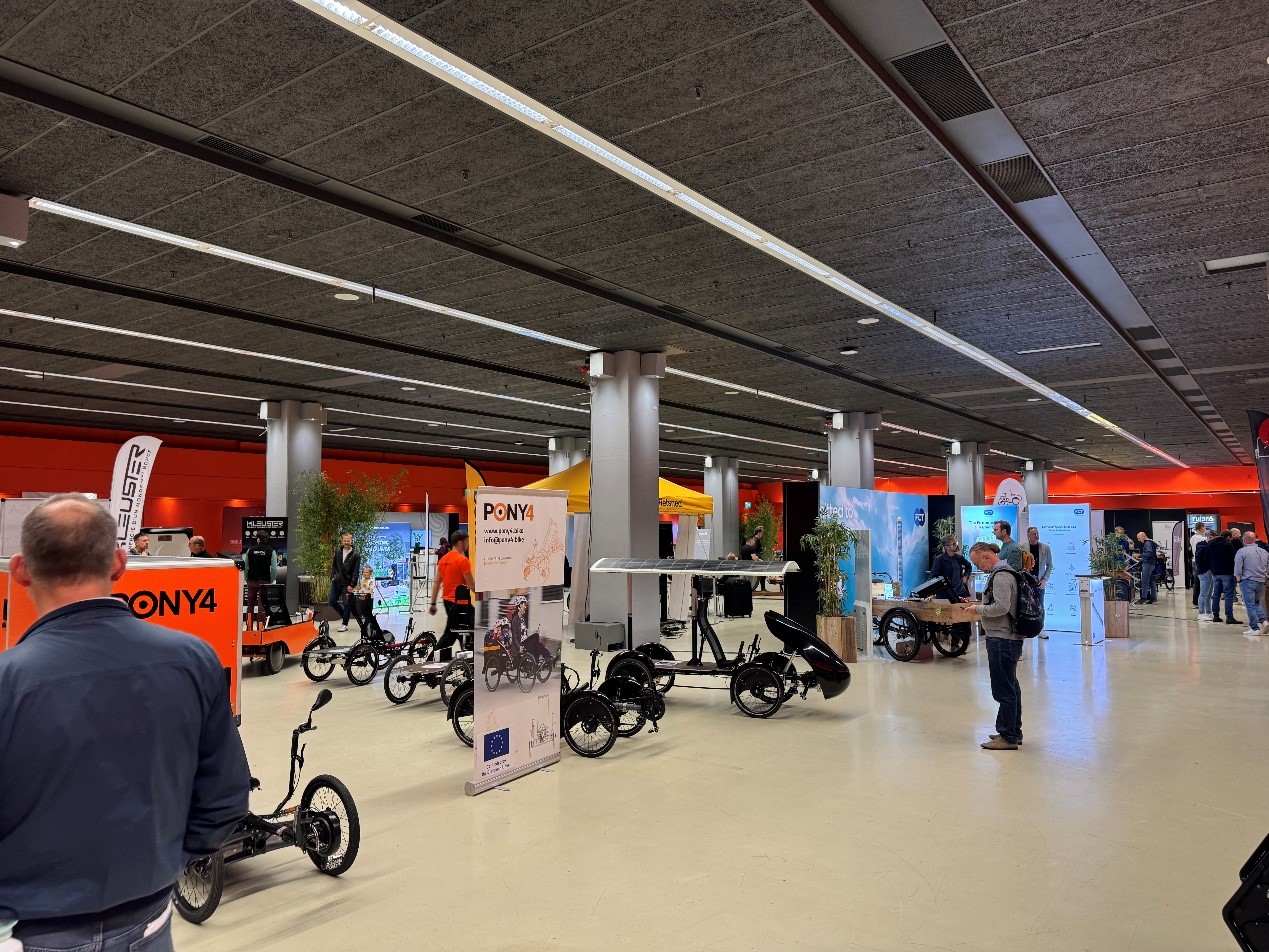
Conclusion: Competition Is Increasing — and the Market Is Better for It
Europe's e-cargo market is no longer dominated by one type of player.
Instead, it is becoming an ecosystem shaped by:
Each group brings strengths — and limitations.
But together, their competition is accelerating innovation in safety, digitalization, payload capacity, and operational efficiency.
This is exactly what Europe needs as cities transition to cleaner, smarter, lighter forms of transport.
The next leaders in this market will not be defined by their past, but by their ability to build the future — intelligently, sustainably, and at fleet scale.
FAQ
1: What is driving competition in the e-cargo market?
A : The rise of urban delivery demand, stricter emission regulations, and digitalization needs are motivating more companies to enter the sector with new designs and technologies.
2: What capabilities will define future e-cargo leaders?
A : Durability, connectivity, modularity, and low operating costs will be the key factors that determine which manufacturers succeed in commercial fleet markets.


