Why Logistics Leaders Are Betting on E-Cargo Bikes — and What It Means for the Future of Urban Mobility
Introduction: A Shift Already in Motion
Across Europe, a silent but powerful logistics transformation is taking place.
From DHL and DPD to UPS, PostNL, and local delivery operators, major logistics companies are rapidly replacing traditional vans with commercial e-cargo bikes.
This shift is not a trend — it's becoming a central pillar of urban delivery strategy.
Driven by zero-emission zones, congestion regulations, and the rising cost of last-mile operations, Europe's delivery giants are rethinking how goods move through cities.
Today's cargo bikes are no longer simple bicycles. They are emerging as urban utility vehicles — connected, modular, and optimized for professional fleet use.
This article explores the forces behind the transition, the operational realities, and how large European delivery companies are redesigning their fleets for a cleaner, more efficient future.
1. Why Cargo Bikes Are Becoming a Logistics Priority
1.1 Regulatory Pressure in Urban Centers
More than 100 European cities have announced upcoming or active low-emission or zero-emission zones.
London, Paris, Amsterdam, Vienna, and Barcelona are leading with strict van access rules.
For logistics companies, this means:
Fewer diesel vans allowed in city centers
Higher operating fees for combustion vehicles
Increasing push toward microhubs and bike-based distribution
Cargo bikes offer a compliant, future-proof alternative.
1.2 The Economics Are Hard to Ignore
A single e-cargo bike can replace 1–2 urban vans for short-radius deliveries.
Across multiple studies, operators report:
25–40% lower operating costs
Faster street-level delivery times in congested zones
Better route flexibility in narrow or restricted streets
Reduced fuel and parking expenses
For high-volume cities, the financial logic is clear.
1.3 The Sustainability Imperative
Large delivery companies face stronger ESG reporting pressure than ever before.
E-cargo bikes produce:
For companies delivering millions of parcels per day, these gains scale rapidly.
2. How Major Delivery Companies Are Transitioning — A Closer Look
2.1 DHL: A Pioneer in Microhubs and Cargo-Bike Logistics
DHL has been experimenting with cargo bikes since 2014 but has recently expanded at unprecedented speed.
Their model relies on:
Urban microhubs inside or near restricted zones
Cargo bikes handling the“last 2 km”
Vans supplying the microhubs from outside the zone
This hybrid model has led to measurable improvements in delivery efficiency.
2.2 DPD and GLS: Scaling Specialized Urban Fleets
These companies are rapidly deploying heavy-duty cargo bikes designed specifically for parcel density.
Their strategies include:
The result: high route density with lower operational risks.
2.3 PostNL, PostNord, and Other Postal Operators
National postal services have become some of Europe's largest cargo-bike fleets.
They are adopting:
Postal operators now see cargo bikes as essential national infrastructure.
2.4 Small and Medium Operators Are Adopting Even Faster
Food delivery, medical supply couriers, and urban service companies are transitioning rapidly due to:
Lower investment thresholds
Modular box design options
Growing availability of IoT-enabled fleet management
In some cities, cargo bikes now make up more than 30% of commercial delivery vehicles.
3. What Makes Modern Cargo Bikes Suitable for Professional Fleets
Today's commercial e-cargo bikes differ dramatically from early consumer-oriented models.
3.1 Industrial-Grade Frames and Payload Capacity
Heavy-duty platforms now support:
150–300 kg combined payload
Reinforced frames for continuous operation
Stability-focused geometry for professional use
These platforms are designed for logistics, not leisure.
3.2 Modular Cargo Configurations
Professional fleets require daily flexibility.
Modern bikes offer:
Modularity reduces fleet complexity and maximizes utilization.
3.3 Integration of Smart Systems
Connectivity is becoming standard across European fleets.
Common functions include:
These systems reduce downtime and strengthen operational planning.
4. How Cities Are Adapting to Cargo Bike Logistics
Urban governments are not just regulating delivery — they're enabling it.
4.1 Dedicated Cargo Bike Lanes
Cities like Copenhagen, Rotterdam, and Utrecht are building cargo-bike-compatible lanes.
4.2 Microhub Infrastructure
Municipalities are partnering with operators and real-estate groups to provide mini-distribution spaces.
4.3 Priority Access Rules
Some cities are granting cargo bikes extended access hours or exclusive zones where vans cannot enter.
This infrastructure will further accelerate fleet transition.
5. Challenges Still Ahead
Even with strong momentum, operators face hurdles:
Lack of standardized cargo-bike regulations
Weather-related operational concerns in northern Europe
The need for trained service networks
Higher upfront acquisition cost compared to scooters or mopeds
Limited availability of large-scale cargo-bike parking or charging facilities
Yet, the long-term direction remains unchanged:
cargo bikes are becoming a backbone of urban logistics.
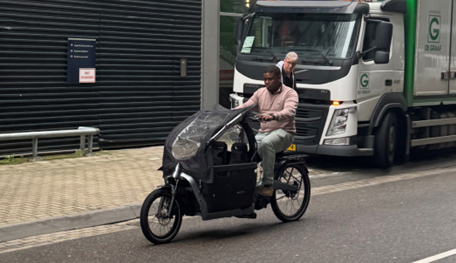
Conclusion: Cargo Bikes Are Becoming Europe's New Urban Workhorses
Major delivery companies are no longer experimenting with cargo bikes — they are scaling them.
This transition reflects a deeper shift in how Europe imagines urban mobility: cleaner, more efficient, more human-centered.
As logistics fleets continue to adopt purpose-built, digitally connected cargo bikes, cities and operators alike will benefit from lower emissions, smoother traffic flow, and a more resilient delivery network.
Europe is entering a new era of logistics — and cargo bikes are at its center.


