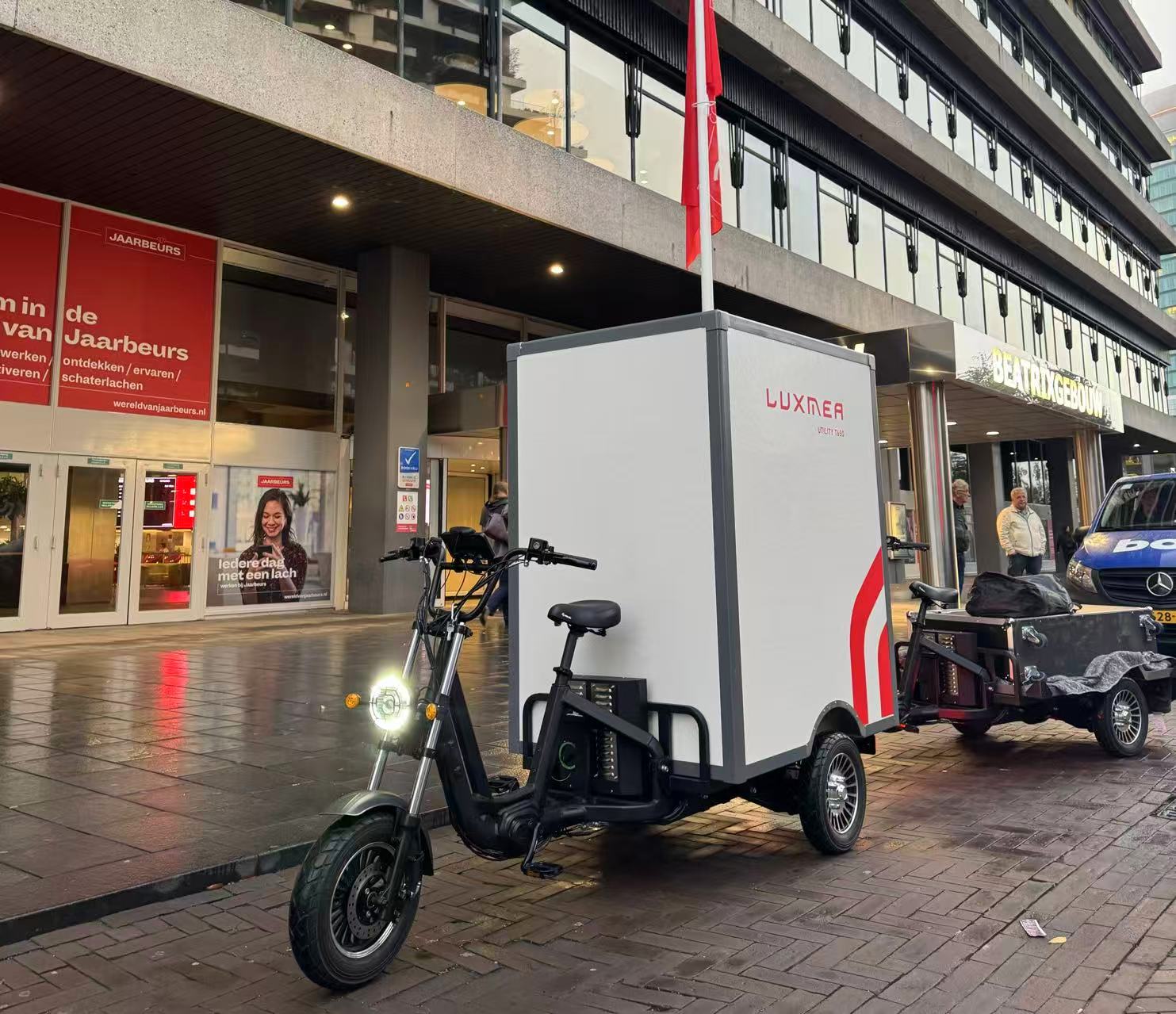
If you've spent any time in cities like Berlin or Amsterdam recently, you've probably noticed something: fewer vans in the center, more cargo bikes weaving through traffic.
That change isn't just about sustainability—it's happening because, in many cases, bikes are simply faster. In dense areas, they can move through traffic more easily, stop closer to delivery points, and avoid the usual parking headaches.
But there's still a gap between perception and reality.
A lot of people assume a cargo bike is just a bigger bicycle. It isn't. Once you're dealing with a fully loaded setup—sometimes well over 200 kg—the way you ride has to change. It's less casual, more deliberate.
1. Weight First: If You Don't Manage It, It Manages You
The biggest difference shows up immediately: weight.
Not just how heavy the bike is, but where that weight sits. If you've ever ridden with an uneven load, you'll know how quickly things can feel unstable.
Most experienced riders stick to a simple habit—keep heavier items low and close to the center. It sounds basic, but it makes a noticeable difference, especially when turning or braking.
Speaking of braking, that's another adjustment. A loaded cargo bike doesn't stop like a regular bike. In the rain—which, let's be honest, is common in a lot of European cities—you need even more distance.
Over time, you stop reacting and start anticipating. You ease off earlier, slow down before things get tight. It becomes instinct.
2. Where You Ride Matters More Than You Think
A lot of newer riders try to stay as close to the curb as possible. It feels safe, like you're out of the way.
In practice, it often does the opposite.
When you hug the edge, cars tend to squeeze past without giving enough room. That's where most uncomfortable moments happen.
More experienced riders don't always do that. On narrower streets, they'll move slightly into the lane when needed. It signals to traffic behind that there isn’t space to pass safely—and most drivers respond to that.
It also helps avoid one of the more common city hazards: car doors opening without warning.
And then there's eye contact. It sounds obvious, but it's easy to forget. At busy intersections or awkward crossings, a quick glance can tell you more than any signal.
3. The "Best" Route Isn't Always the Shortest
Navigation apps aren't built with cargo bikes in mind.
They'll send you down roads that look fine on a map but feel completely wrong once you're on them—too fast, too narrow, too chaotic.
After a while, you start choosing routes differently. Not shorter—just smoother.
A slightly longer route with bike lanes, fewer stops, and less traffic usually ends up saving time (and stress). You're not stopping and starting as much, and the ride feels more predictable.
There's also that last bit of the journey—the part most people don't think about. The final few meters. Where do you stop? Can you park without blocking people?
It sounds minor, but it affects how the whole delivery feels, both for you and for everyone around you.
4. Electric Assist: Helpful, But Easy to Overdo
Electric assist has made cargo bikes far more practical. There's no question about that.
But it can also create bad habits if you're not careful.
It's tempting to rely on the power—accelerate quickly, push harder—but in crowded areas, that usually backfires. Smooth, controlled riding works better.
Battery use is another factor. If you're constantly riding at full power, range drops faster than you expect. Over time, it also puts more strain on the bike.
Riders who get the most out of their bikes tend to use assist more selectively. They don't think about it as "more power = better," but more like a tool to manage effort.
And then there's the feel of the bike itself. Small things—slight vibrations, changes in braking—usually show up before bigger issues. Paying attention to those early signs saves trouble later.
5. A Simple Routine That Actually Helps
You don't need a complex system to ride well day to day. A few consistent habits go a long way.
Before heading out:
Check the brakes, especially if you're carrying weight
Make sure tires are properly inflated
Secure the load so it won't shift
During the ride:
Keep your speed steady
Avoid sudden movements where possible
Make your position on the road clear
After you're done:
Park without getting in people's way
Take a quick look for anything unusual
Charge before the battery gets too low
Nothing complicated—but skipping these is where problems usually start.
6. Where Teams Usually Get It Wrong
From a business perspective, the biggest differences don't usually come from the bikes themselves.
They come from how people use them.
Some teams have clear routines—how to load, how to ride, what to check. Others just figure it out as they go.
You can probably guess which ones run more smoothly.
Without structure, you tend to see the same issues: more wear on components, more small incidents, more inconsistency in delivery times.
With a bit of structure, things stabilize quickly.
Conclusion
Riding a cargo bike in the city isn't complicated, but it is different.
Once you get used to the weight, understand how to position yourself, and start choosing better routes, everything becomes more manageable.
And as cities continue to push for cleaner, more flexible transport, cargo bikes are only going to become more common.
For companies especially, one thing becomes clear over time: it's not just about having the right equipment—it's about how well people use it.
FAQ
1: Is riding a cargo bike much harder than a regular bike? A: At first, yes—mainly because of the weight and size. But with a bit of practice, it becomes manageable.
2: What's the most common mistake new riders make? A: Usually load balance and road positioning—both have a bigger impact than people expect.
In the future, we will continue to uphold the brand concept of "high-end quality、green travel and enjoy life", continue to innovate and forge ahead, and provide the global with higher quality cargo bike products and services.