Urban mobility in Europe is undergoing a quiet but profound transformation. Once seen as a niche tool for eco-conscious families, cargo bikes are now emerging as a serious alternative to vans in urban logistics. From parcel delivery in Berlin to municipal waste collection in Amsterdam, they are steadily becoming part of the logistics backbone of modern European cities.
But as adoption spreads and applications diversify, one critical question emerges:
How do we ensure these vehicles are safe, reliable, and ready for professional, high-intensity use?
That's where standards step in — not as bureaucratic hurdles, but as the invisible infrastructure that enables an entire industry to grow.
Why Cargo Bikes Needed Their Own Standards
For years, cargo bikes were tested under EN 15194, the standard for electrically assisted bicycles (EPACs). That framework worked well for standard e-bikes, typically carrying a single rider and traveling at modest speeds.
But it quickly became clear that cargo bikes are a different species. A trike carrying 200 kilograms of groceries or industrial tools has little in common with a commuter bike. These vehicles endure:
Heavier payloads and asymmetrical loading
Complex multi-track dynamics (two, three, or even four wheels)
Higher braking and structural requirements
Constant stress from commercial use, often 8–10 hours per day
Without dedicated standards, there was no consistent benchmark for manufacturers or regulators. That created uncertainty for buyers and public authorities — a major barrier to large-scale adoption.
DIN 79010: Germany's First Step
In 2020, Germany filled that gap by introducing DIN 79010, the first standard written specifically for cargo bikes.
This document became the foundation for defining what“safe cargo bike design”means in technical terms. It established measurable parameters for:
Maximum permissible gross weight and payload distribution
Stability during braking, turning, and loading
Durability of frames and mechanical components
Safety of electrical assist systems and braking integration
DIN 79010 gave manufacturers a common language for testing and validation. It also gave fleet operators — from logistics firms to city governments — the confidence to procure and deploy cargo bikes at scale.
However, Germany's standard was still national, while cargo bike production, sales, and regulation operate across a single European market. A broader, harmonized framework was the logical next step.
EN 17860: Building a European Framework
By 2022–2023, that step materialized in the form of EN 17860, a new family of standards developed by CEN (the European Committee for Standardization).
Unlike DIN 79010, EN 17860 is a Europe-wide framework designed to accommodate the diversity of cargo bike configurations and applications. It covers:
Single-track (two-wheeled) cargo bikes
Multi-track (three- and four-wheeled) cargo bikes
Heavy-duty cargo cycles up to around 650 kg gross vehicle weight (GVW)
Electrically assisted trailers
One of its most important functions is regulatory: EN 17860 formally distinguishes cargo bikes from motor vehicles under EU Regulation 168/2013. That means manufacturers don't need to pursue costly type-approval processes designed for mopeds or light vehicles. Instead, they can certify under a fit-for-purpose cargo bike framework — one that balances innovation, safety, and practicality.
This shift has opened the door for a wave of design experimentation: from lightweight modular delivery trikes to large-capacity, four-wheeled logistics platforms.
Why Standards Matter for Cities and Businesses
For municipalities, harmonized standards bring confidence. Cities subsidizing cargo bike purchases or integrating them into public fleets need assurance that these vehicles can endure years of daily use, not just months.
For corporate and logistics operators, standards reduce operational risk:
Lower liability in case of accidents or mechanical failure
Simplified procurement, since certified products meet baseline requirements
Predictable fleet maintenance and service intervals
And for the industry as a whole, these frameworks build trust and legitimacy. Cargo bikes are no longer“large bicycles”— they are professional-grade vehicles competing directly with vans. Without recognized testing and certification, that transition would stall.
Luxmea's Approach: Built-In Compliance
At Luxmea, standards are not a constraint — they are a design philosophy.
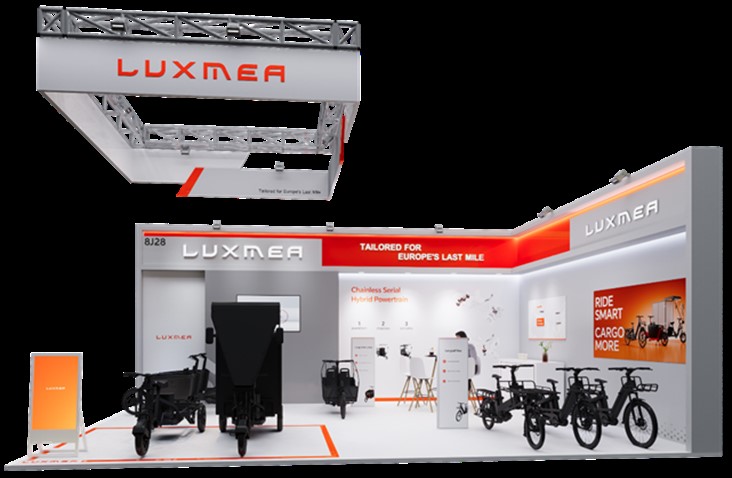
All cargo bike platforms comply with EN 15194, DIN 79010, and EN 17860.
Our modular chassis systems are validated for heavy-duty logistics applications and can be adapted for both commercial and municipal use.
The chainless hybrid powertrain minimizes mechanical wear, extending the vehicle's lifecycle while maintaining certified safety performance.
By embedding compliance into engineering, Luxmea helps partners scale fleets confidently — with vehicles designed for durability, regulation, and real-world reliability.
The Bigger Picture: Standards as Enablers of Innovation
Standards are sometimes perceived as limiting innovation. In reality, they do the opposite. They create a stable foundation for experimentation.
When safety, performance, and reliability expectations are clearly defined, manufacturers can focus on optimizing design, digital integration, and sustainability. It's no coincidence that after DIN 79010 and EN 17860, we've seen a surge in:
Modular cargo platforms adaptable to different payload types
Fleet management systems integrating IoT diagnostics
New financing and leasing models for certified commercial bikes
At the same time, several open questions remain — ones that will shape the next phase of the industry:
Should future standards address rider training and certification, especially for heavy-duty or multi-track cargo bikes?
How should software and connectivity systems (IoT, telematics, over-the-air updates) be regulated?
Where is the line between heavy cargo cycles and light electric vehicles (LEVs)?
These are not academic questions — they define how cargo bikes will integrate into Europe's broader zero-emission transport ecosystem.
Final Thought
The rise of cargo bikes is one of the clearest examples of how technology, policy, and sustainability can converge. The sector's future doesn't depend solely on innovation or demand — it depends on trust.
Standards like DIN 79010 and EN 17860 may not grab headlines, but they quietly make progress possible. They are the reason cities can invest, companies can scale, and consumers can believe.
Because sustainable mobility isn't just about building new vehicles — it's about building the confidence that keeps them moving.
FAQ
1: What's the difference between DIN 79010 and EN 17860?
A: DIN 79010 is Germany’s national cargo bike standard. EN 17860 is the new European-wide framework that expands and unifies testing rules across all EU countries.
2: Why are these standards important?
A: They ensure cargo bikes are safe, reliable, and ready for professional use—helping cities and companies scale fleets with confidence.


